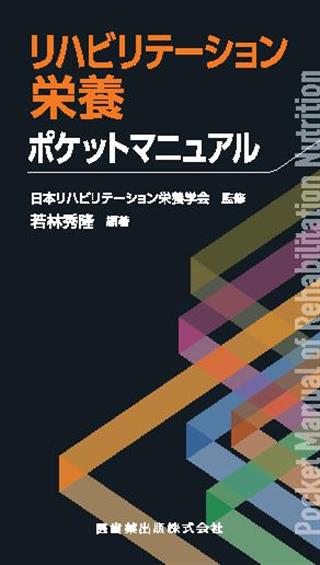
リハビリテーション栄養ポケットマニュアル

出版社: 医歯薬出版
著者:
発行日: 2016-10-05
分野: 臨床医学:外科  >  リハビリ医学
ISBN: 9784263265734
電子書籍版: 2018-10-05 (第1版第2刷)
書籍・雑誌
≪全国送料無料でお届け≫
品切れ

3,740 円(税込)

電子書籍
章別単位での購入はできません
ブラウザ、アプリ閲覧

3,740 円(税込)

商品紹介

日本リハビリテーション栄養学会が監修した,話題の「リハビリテーション栄養」を学ぶうえでバイブルとなりうる必読の一冊! リハビリテーション栄養の基礎知識から臨床での適切な栄養介入まで,幅広い内容を網羅.セッティング別(急性期病棟,地域包括ケア病棟,回復期リハビリテーション病棟,施設・療養型病棟,在宅)のリハビリテーション栄養や,疾患・障害別(廃用症候群,脳卒中,頭部外傷,脊髄損傷など22項目)のリハビリテーション栄養についても詳しく解説.

目次

  • 第1章 リハビリテーション栄養の基礎
    第2章 リハビリテーションの基礎
    第3章 栄養素の基礎
    第4章 サルコペニア
    第5章 フレイル
    第6章 リハビリテーション栄養ケアプロセス
    第7章 リハビリテーション栄養診断
    第8章 サルコペニアの摂食嚥下障害と老嚥
    第9章 口腔とリハビリテーション栄養
    第10章 リハビリテーション薬剤
    第11章 周術期のリハビリテーション栄養
    第12章 リハビリテーション栄養チーム
    第13章 セッティング別リハビリテーション栄養の実践
    第14章 主な疾患・障害のリハビリテーション栄養
    第15章 リハビリテーション栄養実践に役立つ資料

この書籍の参考文献

参考文献のリンクは、リンク先の都合等により正しく表示されない場合がありますので、あらかじめご了承下さい。

本参考文献は電子書籍掲載内容を元にしております。

第1章 リハビリテーション栄養の基礎

P.7 掲載の参考文献
1) 内閣府:平成29年度版高齢社会白書(全体版):http://www8.cao.go.jp/kourei/whitepaper/w-2017/html/gaiyou/s1_1.html
2) 若林秀隆:リハビリテーション栄養ハンドブック(若林秀隆編), 医歯薬出版, 2010, pp1-3.
3) 永野彩乃:リハビリテーション栄養の新定義-リハビリテーション栄養とは何か. リハ栄養 1(1):11-16, 2017.
4) 西岡心大:リハビリテーション栄養ケアプロセス. リハ栄養 1(1):17-21, 2017.
5) Wakabayashi H et al:Malnutrition is associated with poor rehabilitation outcome in elderly inpatients with hospital-associated deconditioning a prospective cohort study. J Rehabil Med 46:277-282, 2014.
6) 西岡心大・他:本邦回復期リハビリテーション病棟入棟患者における栄養障害の実態と高齢脳卒中患者における転帰, ADL帰結との関連. 日静脈経腸栄会誌 30(5):1145-1151, 2015.
8) Nishioka S et al:Nutritional improvement correlates with recovery of activities of daily living among malnourished elderly stroke patients in the convalescent stage. J Acad Nutr Diet 116:837-843, 2016.
9) Yoshimura Y et al:Effects of nutritional supplements on muscle mass and activities of daily living in elderly rehabilitation patients with decreased muscle mass:A randomized controlled trial. J Nutr Health Aging 20(2):185-191, 2016.
10) 前田圭介:リハビリテーション栄養とは. 臨床栄養別冊 リハビリテーション栄養UPDATE 医原性サルコペニアの廃絶を目指して(吉村芳弘, 若林秀隆編), 医歯薬出版, 2017, pp8-13.

第2章 リハビリテーションの基礎

P.14 掲載の参考文献
1) 上田敏:序説. 標準リハビリテーション医学, 第3版(上田敏監修, 伊藤利之・他編), 医学書院, 2012, pp3-31.
2) 千野直一:リハビリテーション医学総論. 現代リハビリテーション医学, 改訂第3版(千野直一編), 金原出版, 2009, pp1-25.

第3章 栄養素の基礎

P.35 掲載の参考文献
1) 大村健二:栄養塾 症例で学ぶクリニカルパール(大村健二編), 医学書院, 2010, pp2-39.
2) 松本義信, 中坊幸弘:糖質の消化・吸収. Surg Fronti 17(2):172-174, 2010.
3) Berg JM・他(入村達郎・他監訳) ストライヤー生化学, 第7版, 東京化学同人, 2013, pp444-450, 508-513, 594-599, 750-756, 857-860.
4) 関根孝司:腎におけるエネルギー産生と消費(3)各ネフロンセグメントにおけるエネルギー産生. Nephrology Frontier 9(4):381-384, 2010.
5) 大村健二:アミノ酸の行方. 栄養管理をマスターする 代謝の理解はなぜ大事?, 文光堂, 2014, pp16-21.
6) Wolfe RR:Tracers in metabolic research:Radioisotope and stable isotope/mass spectrometry methods, A.R. Liss, New York, 1984, pp157-174.
7) Campbell WW et al:The recommended dietary allowance for protein may not be adequate for older people to maintain skeletal muscle. J Gerontol A Biol Sci Med Sci 56(6):M373-380, 2001.
8) Berg JM・他(入村達郎・他監訳):ストライヤー生化学, 第5版, 東京化学同人, 2004, pp857-860.

第4章 サルコペニア

P.43 掲載の参考文献
1) サルコペニア診療ガイドライン作成委員会:サルコペニア診療ガイドライン2017年版, ライフサイエンス出版, 2017.
2) Chen LK et al:Sarcopenia in Asia:consensus report of the Asian Working Group for Sarcopenia. J Am Med Dir Assoc 15:95-101, 2014.
3) 西口修平・他:肝臓学会サルコペニア判定基準作成ワーキンググループ, 肝疾患におけるサルコペニアの判定基準(第1版). 肝臓 57:353-368, 2016.
4) 厚生労働科学研究補助金(長寿科学総合研究事業)高齢者における加齢性筋肉減弱現象(サルコペニア)に関する予防対策確立のための包括的研究研究班(原田敦代表):サルコペニア:定義と診断に関する欧州関連学会のコンセンサス-高齢者のサルコペニアに関する欧州ワーキンググループの報告-の監訳. 日老医誌 49:788-805, 2012.
5) Tanaka T et al:"Yubi-wakka" (finger-ring) test:A practical self-screening method for sarcopenia, and a predictor of disability and mortality among Japanese community-dwelling older adults. Geriatr Gerontol Int 18:224-232, 2018.
6) Shafiee G et al:Prevalence of sarcopenia in the world:a systematic review and meta-analysis of general population studies. J Diabetes Metab Disord 16:21, 2017.
7) Cruz-Jentoft AJ et al:Prevalence of and interventions for sarcopenia in ageing adults:a systematic review. Report of the International Sarcopenia Initiative (EWGSOP and IWGS). Age Ageing 43(6):748-759, 2014.
8) Rubio-Maicas C et al:Prevalence of sarcopenia in a media and long stay Unit. Rev Clin Esp 214(6):303-308, 2014.
9) Yamanouchi A et al:Severely Decreased Muscle Mass among Older Patients Hospitalized in a Long-Term Care Ward in Japan. J Nutr Sci Vitaminol 62:229-234, 2016.
10) Moon SJ et al:Relationship between Stage of Chronic Kidney Disease and Sarcopenia in Korean Aged 40 Years and Older Using the Korea National Health and Nutrition Examination Surveys (KNHANES IV-2, 3, and V-1, 2), 2008-2011. PLoS One 10(6):e0130740, 2005.
11) Du Y et al;Acute Care and Emergency Surgery (ACES) Group:Sarcopenia is a predictor of outcomes in very elderly patients undergoing emergency surgery. Surgery 156(3):521-527, 2014.
12) Biolo G et al:Anabolic resistance assessed by oral stable isotope ingestion following bed rest in young and older adult volunteers:Relationships with changes in muscle mass. Clin Nutr 36:1420-1426, 2017.
13) Martone AM et al:The incidence of sarcopenia among hospitalized older patients:results from the Glisten study. J Cachexia Sarcopenia Muscle 8:907-914, 2017.
14) Atkins JL et al:Sarcopenic obesity and risk of cardiovascular disease and mortality:a population-based cohort study of older men. J Am Geriatr Soc 62:253-260, 2014.
15) Cerri AP et al:Sarcopenia and malnutrition in acutely ill hospitalized elderly:Prevalence and outcomes. Clin Nutr 34:745-751, 2015.
16) Shachar SS et al:Prognostic value of sarcopenia in adults with solid tumours:A meta-analysis and systematic review. Eur J Cancer 57:58-67, 2016.
17) 谷本芳美・他:地域高齢者におけるサルコペニアに関連する要因の検討. 日本公衛誌 60:683-690, 2013.
18) Muscariello E et al:Dietary protein intake in sarcopenic obese older women. Clin Interv Aging 11:133-140, 2016.
19) Akune T et al:Exercise habits during middle age are associated with lower prevalence of sarcopenia:the ROAD study. Osteoporos Int 25:1081-1088, 2014.
20) 下方浩史:疫学研究からのサルコペニアとそのリスク-特に栄養との関連. 日老医誌 49:721-725, 2012.
21) Yoshimura Y et al:Interventions for Treating Sarcopenia:A Systematic Review and Meta-Analysis of Randomized Controlled Studies. J Am Med Dir Assoc 18:553, 2017.
22) Kim HK et al:Effects of exercise and amino acid supplementation on body composition and physical function in community-dwelling elderly Japanese sarcopenic women:a randomized controlled trial. J Am Geriatr Soc 60:16-23, 2012.
23) Papanicolaou DA et al:A phase IIA randomized, placebo-controlled clinical trial to study the efficacy and safety of the selective androgen receptor modulator (SARM), MK-0773 in female participants with sarcopenia. J Nutr Health Aging 17:533-543, 2013.

第5章 フレイル

P.53 掲載の参考文献
1) Morley JE et al:Frailty consensus:a call to action. J Am Med Dir Assoc 14(6):392-397, 2013.
2) Fried LP et al:Frailty in older adults:evidence for a phenotype. J Gerontol A Biol Sci Med Sci 56(3):M146-156, 2001.
3) Kelaiditi E et al;IANA/IAGG:Cognitive frailty:rational and definition from an (I.A.N.A./I.A.G.G.) international consensus group. J Nutr Health Aging 17:726-734, 2013.
4) 藤原佳典:地域高齢者における社会的フレイルの概念と特徴~社会的側面から見たフレイル. 日転倒予会誌3 (3):11-16, 2017.
5) Berkman LF:Social epidemiology:social determinants of health in the United States:are we losing ground? Annu Rev Public Health 30:27-41, 2009.
6) Fujiwara Y et al:Synergistic or independent impacts of low frequency of going outside the home and social isolation on functional decline:A 4-year prospective study of urban Japanese older adults. Geriatr Gerontol Int 17(3):500-508, 2017.
7) Dent E et al:The Asia-Pacific Clinical Practice Guidelines for the Management of Frailty. J Am Med Dir Assoc 18(7):564-575, 2017.
8) Satake S et al:Prevalence of frailty among community-dwellers and outpatients in Japan as defined by the Japanese version of the Cardiovascular Health Study criteria. Geriatr Gerontol Int 17(12):2629-2634, 2017.
9) Makizako H et al:Impact of physical frailty on disability in community-dwelling older adults:a prospective cohort study. BMJ Open 5:e008462, 2015.
10) 長寿医療研究開発費事業(27-23):要介護高齢者, フレイル高齢者, 認知症高齢者に対する栄養療法, 運動療法, 薬物療法に関するガイドライン作成に向けた調査研究班編:フレイル診療ガイド2018年版, ライフサイエンス出版, 2018.
11) Bauman A et al:Updating the Evidence for Physical Activity:Summative Reviews of the Epidemiological Evidence, Prevalence, and Interventions to Promote "Active Aging". Gerontologist 56(Suppl 2):S268-280, 2016.
12) Schoenfeld BJ et al:Strength and Hypertrophy Adaptations Between Low- vs. High-Load Resistance Training:A Systematic Review and Meta-analysis. J Strength Cond Res 31(12):3508-3523, 2017.
13) Bartali B et al:Low nutrient intake is an essential component of frailty in older persons. J Gerontol A Biol Sci Med Sci 61(6):589-593, 2006.
14) Smit E et al:Lower nutritional status and higher food insufficiency in frail older US adults. Br J Nutr 110(1):172-178, 2013.
15) Hubbard RE et al:Frailty, body mass index, and abdominal obesity in older people. J Gerontol A Biol Sci Med Sci 65(4):377-381, 2010.
16) Strandberg TE et al:The "obesity paradox," frailty, disability, and mortality in older men:a prospective, longitudinal cohort study. Am J Epidemiol 178(9):1452-1460, 2013.
17) Vellas BJ et al:Changes in nutritional status and patterns of morbidity among free-living elderly persons:a 10-year longitudinal study. Nutrition 13(6):515-519, 1997.
18) Hubbard RE et al:Frailty, body mass index, and abdominal obesity in older people. J Gerontol A Biol Sci Med Sci 65(4):377-381, 2010.
19) Morley JE et al:Nutritional recommendations for the management of sarcopenia. J Am Med Dir Assoc 11(6):391-396, 2010.
20) Paddon-Jones D, Rasmussen BB:Dietary protein recommendations and the prevention of sarcopenia. Curr Opin Clin Nutr Metab Care 12(1):86-90, 2009.
21) Bauer J et al:Evidence-based recommendations for optimal dietary protein intake in older people:a position paper from the PROT-AGE Study Group. J Am Med Dir Assoc 14(8):542-559, 2013.
22) Bounoure L et al:Detection and treatment of medical inpatients with or at-risk of malnutrition:Suggested procedures based on validated guidelines. Nutrition 32(7-8):790-798, 2016.
23) Tieland M et al:Low vitamin D status is associated with reduced muscle mass and impaired physical performance in frail elderly people. Eur J Clin Nutr 67(10):1050-1055, 2013.
24) Wong YY et al:Low vitamin D status is an independent predictor of increased frailty and all-cause mortality in older men:the Health in Men Study. J Clin Endocrinol Metab 98(9):3821-3828, 2013.
25) Bollwein J et al:Dietary quality is related to frailty in community-dwelling older adults. J Gerontol A Biol Sci Med Sci 68(4):483-489, 2013.
26) Frank C, Weir E:Deprescribing for older patients. CMAJ 186(18):1369-1376, 2014.
27) Hamilton H et al:Potentially inappropriate medications defined by STOPP criteria and the risk of adverse drug events in older hospitalized patients. Arch Intern Med 171(11):1013-1019, 2011.
28) O'Mahony D et al:STOPP/START criteria for potentially inappropriate prescribing in older people:version 2. Age Ageing 44(2):213-218, 2015.

第6章 リハビリテーション栄養ケアプロセス

P.83 掲載の参考文献
1) 古谷房枝:リハビリテーション栄養アセスメント. リハ栄養 1(1):22-29, 2017.
2) 障害者福祉研究会(編):序論. 国際生活機能分類-国際障害分類改訂版, 中央法規, pp1-22.
3) 野口善令:なぜジェネラリストに診断推論の考え方が必要なのか. 日プライマリケア連会誌 33(2):211-214, 2010.
4) Norman G:Research in clinical reasoning:past history and current trends. Med Educ 39(4):418-427, 2005.
5) Yamada M et al:Prevalence of sarcopenia in community-dwelling Japanese older adults. J Am Med Dir Assoc 14(12):911-915, 2013.
6) Maeda K et al:Sarcopenia is highly prevalent in older medical patients with mobility limitation. Nutr Clin Pract 32(1):110-115, 2017.
7) Chen LK et al:Sarcopenia in Asia:consensus report of the Asian Working Group for Sarcopenia. J Am Med Dir Assoc 15(2):95-101, 2014.
8) Kawakami R et al:Calf circumference as a surrogate marker of muscle mass for diagnosing sarcopenia in Japanese men and women. Geriatr Gerontol Int 15(8):969-976, 2015.
9) Maeda K et al:Predictive accuracy of calf circumference measurements to detect decreased skeletal muscle mass and European Society for Clinical Nutrition and Metabolism-defined malnutrition in hospitalized older patients. Ann Nutr Metab 71(1-2):10-15, 2017.
10) Doran GT:There's a SMART way to write management's goals and objectives. Management Review 70(11):35-36, 1981.
11) Bovend'Eerdt TJ et al:Writing SMART rehabilitation goals and achieving goal attainment scaling:a practical guide. Clin Rehabil 23(4):352-361, 2009.
12) 江口夏郎, 山川隆史:仮説思考, ファーストプレス, 2007, pp8-15.
13) 西岡心大:低栄養とリハビリテーション栄養管理の考え方-特にエネルギー必要量に関して. 日静脈経腸栄会誌 31(4):944-948, 2016.
14) 金久弥生:リハビリテーションからみた栄養管理. リハ栄養 1(1):86-93, 2017.
15) 寺島秀夫:侵襲急性期におけるエネルギー投与のパラダイムシフト-内因性エネルギー供給を考慮した理論的エネルギー投与法の提言. 日集中医誌 20:359-367, 2013.
16) McClave SA et al:Guidelines for the Provision and Assessment of Nutrition Support Therapy in the Adult Critically Ill Patient:Society of Critical Care Medicine (SCCM) and American Society for Parenteral and Enteral Nutrition (A.S.P.E.N.). J Parenter Enter Nutr 40(2):159-211, 2016.
17) 東口高志(編):JJNスペシャル「治る力」を引き出す 実践!臨床栄養, 医学書院, 2010, pp108-111.
18) Long CL et al:Metabolic response to injury and illness:estimation of energy and protein needs from indirect calorimetry and nitrogen balance. J Parenter Enter Nutr 3:452-456, 1979.
19) Butte NF, Caballero B:Energy needs:Assessment and requirements. Modern nutrition in health and disease, 11th edition, Ross C et al (eds). Lippincott Williams & Wolters Kluwer business, Baltimore, 2014, pp88-101.
20) 和田彩子・他:-脳卒中回復期患者の栄養療法-活動係数の目安. JJRN 49:S214, 2012.
21) 清水孝宏(編):エキスパートが本気で教える重症患者の栄養管理, 総合医学社, 2013, p324.
22) 若林秀隆:リハビリテーションと臨床栄養. Jpn J Rehabil Med 48:270-281, 2011.
23) Hebuterne X et al:Ageing and muscle:the effects of malnutrition, re-nutrition, and physical exercise. Curr Opin Clin Nutr Metab Care 4:295-300, 2001.
24) 渡辺明治, 福井冨穂(編):今日の病態栄養療法, 南江堂, 2003, pp412-413.
25) Deutz NE et al:Protein intake and exercise for optimal muscle function with aging:recommendations from the ESPEN Expert Group. Clin Nutr 33(6):929-936, 2014.
26) Morley JE et al:Nutritional recommendations for the management of sarcopenia. J Am Med Dir Assoc 11(6):391-396, 2010.
27) 厚生労働省:日本人の食事摂取基準(2015年版)策定検討会報告書, 2015, p151:http://www.mhlw.go.jp/file/05-Shingikai-10901000-Kenkoukyoku-Soumuka/0000114399.pdf (アクセス日時:2018年5月20日)
28) 日本静脈経腸栄養学会(編):日本静脈経腸栄養学会 静脈経腸栄養ハンドブック, 南江堂, 2011, pp168-175.
29) Wakabayashi H, Sashika H:Malnutrition is associated with poor rehabilitation outcome in elderly inpatients with hospital-associated deconditioning a prospective cohort study. J Rehabil Med 46(3):277-282, 2014.
30) Nishioka S et al:Nutritional Improvement Correlates with Recovery of Activities of Daily Living among Malnourished Elderly Stroke Patients in the Convalescent Stage:A Cross-Sectional Study. J Acad Nutr Diet 116(5):837-843, 2016.
31) Nii M:Nutritional Improvement and Energy Intake Are Associated with Functional Recovery in Patients after Cerebrovascular Disorders. J Stroke Cerebrovasc Dis 25(1):57-62, 2016.
32) Yoshimura Y et al:Effects of Nutritional Supplements on Muscle Mass and Activities of Daily Living in Elderly Rehabilitation Patients with Decreased Muscle Mass:A Randomized Controlled Trial. J Nutr Health Aging 20(2):185-191, 2016.
33) Wakabayashi H:Rehabilitation nutrition in general and family medicine. J Gen Fam Med 18(4):153-154, 2017.
34) 森隆志:栄養からみたリハビリテーション. リハ栄養 1(1):94-98, 2017.
35) 武澤明子:リハビリテーション栄養管理により炎症反応高値でも機能改善したサルコペニアを有する慢性閉塞性肺疾患患者. 臨床栄養 130(5):645, 2017.
36) Evans WJ et al:Cachexia:a new definition. Clin Nutr 27:793-799, 2008.
37) Fearon K et al:Definition and classification of cancer cachexia:an international consensus. Lancet Oncology 12:489-495, 2011.
38) Fiatarone MA et al:Exercise training and nutritional supplementation for physical frailty in very elderly people. N Engl J Med 330:1769-1775, 1994.

第7章 リハビリテーション栄養診断

P.101 掲載の参考文献
1) 阿部甫, 海沼勝:イシナギの肝臓を原因食とする食中毒様疾患について. 日獣医師会誌 10(3):125-127, 1957.
P.111 掲載の参考文献
1) Sandra B:Diagnosing Pediatric Malnutrition:Paradigm Shifts of Etiology-Related Definitions and Appraisal of the Indicators. Nutr Clin Pract 32:52-67, 2017.
2) Cederholm T et al:ESPEN Guidelines on Definitions and Terminology of Clinical Nutrition. Clin Nutr 36:49-64, 2017.
3) Kaiser MJ et al:Frequency of malnutrition in older Adults:a multinational perspective using the mini nutritional assessment. J Am Geriatr Soc 58:1734-1738, 2010.
4) International Food Policy Research Institute. 2016. Global Nutrition Report 2016:From Promise to Impact:Ending Malnutrition by 2030. Washington, DC.
5) Mehta NM et al:Defining pediatric malnutrition:A paradigm shift toward etiology-related definitions. J Parenter Nutr 37(4):460-481, 2013.
6) Jensen GL et al:Adult starvation and disease-related malnutrition:A proposal for etiology-based diagnosis in the clinical practice setting from the international consensus guideline committee. JParenter Enter Nutr 34:156-159, 2010.
7) White JV et al:Consensus statement:Academy of Nutrition and Dietetics and American Society for Parenteral and Enteral Nutrition:characteristics recommended for the identification and documentation of adult malnutrition (undernutrition). J Parenter Enter Nutr 36:275-283, 2012.
8) Van Nes M-C et al:Does the Mini Nutritional Assessment predict hospitalization outcomes in older people? Age Aging 30:221-226, 2001.
9) Kondrup J et al:Nutritional risk screening (NRS 2002):a new method based on an analysis of controlledc linical trials. Clin Nutr 22:321-336, 2003.
10) Scott A:Screening for malnutrition in the community:the MUST tool. Br J Community Nurs 13(9):406, 408, 410-412, 2008.
11) Detsky A et al:What is subjective global assessment of nutritional status? JPEN J Parenter Enteral Nutr 11(1):8-13, 1987.
12) Cederholm T et al:Diagnostic criteria for malnutrition - An ESPEN Consensus Statement. Clin Nutr 34:335-340, 2015.
13) Tommy C et al:To create a consensus on malnutrition diagnostic criteria:A report fromthe Global Leadership Initiative on Malnutrition (GLIM) meeting at the ESPEN Congress 2016. Clin Nutr 36:7-10, 2017.
14) 日本肥満学会編:肥満症診療ガイドライン2016, ライフサイエンス出版, 2016, pxii.
15) 厚生労働省「日本人の食事摂取基準(2015年版)」策定検討会:日本人の食事摂取基準(2015年版), 第一出版, 2014.
16) Examination Committee of Criteria for 'Obesity Disease' in Japan;Japan Society for the Study of Obesity. New criteria for 'obesity disease' in Japan. Circ J 66(11):987-992, 2002.
17) 田所直子:腹部超音波法による内臓脂肪型肥満の診断. 日本臨床 61(増6):374-379, 2003.
18) 日本栄養アセスメント研究会身体計測基準値検討委員会:日本人の新身体計測基準値JARD2001. 栄養評価と治療 19(増):69, 2002.
19) 若林秀隆:PT・OT・STのためのリハビリテーション栄養-栄養ケアがリハを変える. 医歯薬出版, 2010, p36.
20) Hiuge-Shimizu A et al:Absolute value of visceral fat area measured computed tomography scans and obesity-related cardiovascular risk factors in large-scale Japanese general population (the VACATION-J study). Ann Med 44:82-92, 2012.
21) Craig CL et al:International physical activity questionnaire:12-country reliability and validity. Med Sci Sports Exerc 35:1381-1395, 2003.
22) Fried LP et al:Frailty in older adults:evidence for a phenotype. J Gerontol A Biol Sci Med Sci 56:146-156, 2011.
23) 一般社団法人日本内分泌学会・一般社団法人日本骨代謝学会・厚生労働省難治性疾患克服研究事業ホルモン受容機構異常に関する調査研究班:ビタミンD不足・欠乏の判定指針. 日内分泌会誌 93:1-10, 2017.
24) Preston AM et al:Influence of environmental tobacco smoke on vitamin C status in children. Am J Clin Nut 77(1):167-172, 2003.
25) Volpi E et al:The response of muscle protein anabolism to combined hyperaminoacidemia and glucose-induced hyperinsulinemia is impaired in the elderly. J Clin Endocrinol Metab 85(12):4481-4490, 2000.
26) Previdelli AN et al:Balance of macronutrient intake among Brazilian elderly:analysis of the National Dietary Survey 2008-2009. Rev Bras Epidemiol 20(1):70-80, 2017.
27) Marvi-Esfahani M et al:Comparison of energy consumption in different clinical forms multiple sclerosis with normal subjects (cohort study). Mult Scler Relat Disord 6:97-101, 2016.
28) Levi S et al:Increased energy expenditure in Parkinson's disease. BMJ 301(6763):1256-1257, 1990.
29) 難病情報センター:メープルシロップ尿症:http://www.nanbyou.or.jp/entry/4814. (アクセス日時:2017年9月14日)
30) Holst M et al:Multi-modal intervention improved oral intake in hospitalized patients. A one year follow-up study. Clin Nutr 34(2):315-322, 2015.
31) Johnson RK:Dietary intake--how do we measure what people are really eating? Obes Res 10(1):63S-68S, 2002.
32) Kwon SH et al:Difference in food and nutrient intakes in Korean elderly people according to chewing difficulty:using data from the Korea National Health and Nutrition Examination Survey 2013 (6th). Nutr Res Pract 11(2):139-146, 2017.
33) 一般社団法人日本内分泌学会・一般社団法人日本骨代謝学会・厚生労働省難治性疾患克服研究事業ホルモン受容機構異常に関する調査研究班:ビタミンD不足・欠乏の判定指針. 日内分泌会誌 93:1-10, 2017.
34) Deutz NE et al:Protein intake and exercise for optimal muscle function with aging:recommendations from the ESPEN Expert Group. Clin Nutr 33(6):929-936, 2014.
35) 日本臨床外科学会ホームページ:http://www.ringe.jp/civic/igan/igan_13.html (アクセス日時:2017年5月18日)
36) 福田能啓:吸収不良症候群. 静脈経腸栄養 27(1):5-17, 2012.
37) 厚生労働省:重篤副作用疾患別対応マニュアル-薬物性味覚障害, 2011, pp6-26:https://www.pmda.go.jp/files/000145452.pdf (アクセス日時:2017年5月13日)
38) Iizaka S et al:Estimation of protein requirements according to nitrogen balance for older hospitalized adults with pressure ulcers according to wound severity in Japan. J Am Geriatr Soc 60(11):2027-2034, 2012.
39) Cereda E et al:Efficacy of a Disease-Specific Nutritional Support for Pressure Ulcer Healing:A Systematic Review and Meta-Analysis. J Nutr Health Aging 21(6):655-661, 2017.
40) 日本褥瘡学会教育委員会ガイドライン改訂委員会:褥瘡予防・管理ガイドライン(第4版). 日本褥瘡学会誌 17(4):487-557, 2015.
41) Dallman MF et al:Stress-induced obesity and the emotional nervous system. Trends Endocrinol Metab 21(3):159-165, 2010.
42) Zellner DA et al:Food selection changes under stress. Physiol Behav 87(4):789-793, 2006.
43) Groesz LM et al:What is eating you? Stress and the drive to eat. Appetite 58(2):717-721, 2012.
44) Nishitani N et al:Eating behavior related to obesity and job stress in male Japanese workers. Nutrition 25(1):45-50, 2009.
45) 日本腎臓学会(編):慢性腎臓病に対する食事摂取基準(成人). 慢性腎臓病に対する食事摂取基準2014年版(日本腎臓学会編), 東京医学社, 2014, pp1-11.

第8章 サルコペニアの摂食嚥下障害と老嚥

P.121 掲載の参考文献
1) Jahnke V:Dysphagia in the erderly. HNO 39(11)442-444, 1991.
2) Robbins J et al:Oropharyngeal swallowing in normal adults of different ages. Gastroenterology 103(3):823-829, 1992.
3) Rofes L et al:Pathophysiology of oropharyngeal dysphagia in the frail elderly. Neurogastroenterol Motil 22:851-858, e230, 2010.
4) Wakabayashi H:Presbyphagia and Sarcopenic Dysphagia:Association between Aging, Sarcopenia, and Degulution Disorders. J Frailty Aging 3:97-103, 2014.
5) Veldee MS, Peth LD:Can protein-calorie malnutrition cause dysphagia?. Dysphagia 7(2):86-101, 1992.
6) Kuroda Y, Kuroda R:Relationship between thinness and swallowing function in Japanese older adults:implications for sarcopenic dysphagia. J Am Geriatr Soc 60:1785-1786, 2012.
7) Mori T et al:Development, reliability, and validity of a diagnostic algorithm for sarcopenic dysphagia. JCSM Clinical Reports 2(2):1-10. 2017.
8) Feng X et al:Aging-related geniohyoid muscle atrophy is related to aspiration status in healthy older adults. J Gerontol A Biol Sci Med Sci 68:853-860, 2012.
9) Molfenter SM et al:Age-Related Changes in Pharyngeal Lumen Size:A Retrospective MRI Analysis. Dysphagia 30:321-327, 2015.
10) Tamura F et al:Tongue thickness relates to nutritional status in the elderly. Dysphagia 27:556-561, 2012.
11) Utanohara Y et al:Standard values of maximum tongue pressure taken using newly developed disposable tongue pressure measurement device. Dysphagia 23:286-290, 2008.
12) Butler SG et al:The relationship of aspiration status with tongue and handgrip strength in healthy older adults. J Gerontol A Biol Sci Med Sci 66:452-458, 2011.
13) Robbins J et al:Age-Related Differences in Pressures Generated During Isometric Presses and Swallows by Healthy Adults. Dysphagia 31:90-96, 2016.
14) Machida N et al:Effects of aging and sarcopenia on tongue pressure and jaw-opening force. Geriatr Gerontol Int 17:295-301, 2017.
15) 兵頭政光:加齢に伴う嚥下様式の変化. 耳鼻展望 52:282-288, 2009.
16) Chen LK et al:Sarcopenia in Asia:consensus report of the Asian Working Group for Sarcopenia. J Am Med Dir Assoc 15:95-101, 2014.
17) Maeda K et al:Decreased Skeletal Muscle Mass and Risk Factors of Sarcopenic Dysphagia:A Prospective Observational Cohort Study. J Gerontol A Biol Sci Med Sci 72:1290-1294, 2017.
18) Maeda K et al:Tentative nil per os leads to poor outcomes in older adults with aspiration pneumonia. J Clin Nutr 35(5):1147-1152, 2016.
19) Maeda, Akagi J:Treatment of Sarcopenic Dysphagia with Rehabilitation and Nutritional Support:A Comprehensive Approach. J Acad Nutr Diet 116:573-577, 2016.
20) Wakabayashi H, Uwano R:Rehabilitation Nutrition for Possible Sarcopenic Dysphagia After Lung Cancer Surgery:A Case Report. Am J Phys Med Rehabil 95:e84-89, 2016.

第9章 口腔とリハビリテーション栄養

P.130 掲載の参考文献
1) 国立長寿医療研究センター:平成25年度老人保健事業推進費等補助金老人保健健康増進等事業「食(栄養)および口腔機能に着目した加齢症候群の概念の確立と介護予防(虚弱化予防)から要介護状態に至る口腔ケアの包括的対策の構築に関する研究」報告書(平成26年3月).
2) 一般社団法人日本老年歯科医学会学術委員会:高齢期における口腔機能低下-学会見解論文 2016年度版. 老年歯医 31(2):81-99, 2016.
3) 前田圭介:歯科医が知っておきたい低栄養の診かたとその対応. 老年歯医 32(3):317-322, 2017.
4) 飯島勝也(主任研究者):平成26年度老人保健事業推進費等補助金老人保健健康増進等事業「食(栄養)および口腔機能に着目した加齢症候群の概念の確立と介護予防(虚弱化予防)から要介護状態に至る口腔機能支援等の包括的対策の構築および検証を目的とした調査研究」事業実施報告書(平成27年3月).
5) Tanaka T et al:Oral Frailty as a Risk Factor for Physical Frailty and Mortality in Community-Dwelling Elderly. J Gerontol A Biol Sci Med Sci doi:10.1093/gerona/glx225, 2017.

第10章 リハビリテーション薬剤

P.135 掲載の参考文献
1) Dent E et al:The Asia-Pacific Clinical Practice Guidelines for the Management of Frailty. J Am Med Dir Assoc 18:564-575, 2017.
2) Kose E et al:Impact of Polypharmacy on the Rehabilitation Outcome of Japanese Stroke Patients in the Convalescent Rehabilitation Ward. J Aging Res 2016:7957825, 2016.
3) Kose E et al:Role of potentially inappropriate medication use in rehabilitation outcomes for geriatric patients after strokes. Geriatr Gerontol Int 2017 doi:10.1111/ggi.13187.
4) 日本老年医学会, 日本医療研究開発機構研究費・高齢者の薬物治療の安全性に関する研究研究班:高齢者の安全な薬物療法ガイドライン2015, メジカルビュー社, 2015.

第11章 周術期のリハビリテーション栄養

P.145 掲載の参考文献
1) Gustafsson UO et al:Guidelines for perioperative care in elective colonic surgery:Enhanced Recovery After Surgery (ERAS(R))Society recommendations. Clin Nutr 31:783-800, 2012.
2) Lassen K et al:Guidelines for perioperative care for pancreaticoduodenectomy:Enhanced Recovery After Surgery (ERAS(R)) Society Recommendations. World J Surg 37:240-258, 2013.
3) Cerantola Y et al:Guidelines for perioperative care after radical cystectomy for bladder cancer:Enhanced Recovery After Surgery (ERAS(R)) society recommendations. Clin Nutr 32:879-887, 2013.
4) Nelson G et al:Guidelines for pre- and intra-operative care in gynecologic/oncology surgery:Enhanced Recovery After Surgery (ERAS(R)) Society recommendations-Part I. Gynecol Oncol 140:313-322, 2016.
5) 宮田剛・他:術後回復促進のためのエッセンス-日本外科代謝栄養学会ESSENSEプロジェクト. 日手術医会誌 35(1):13-17, 2014.
6) Maessen J et al:A protocol is not enough to implement an enhanced recovery programme for colorectal resection. Br J Surg 94:224-231, 2007.
7) Wiklund M et al:Physical Activity in the Immediate Postoperative Phase in Patients Undergoing Roux-en-Y Gastric Bypass:a Randomized Controlled Trial. Obes Surg 25:2245-2250, 2015.
8) Ahn KY et al:The effects of inpatient exercise therapy on the length of hospital stay in stages I-III colon cancer patients:randomized controlled trial. Int J Colorectal Dis 28:643-651, 2013.
9) Zhuang C et al:Sarcopenia is an Independent Predictor of Severe Postoperative Complications and Long-Term Survival After Radical Gastrectomy for Gastric Cancer:Analysis from a Large-Scale Cohort. Medicine (Baltimore) 95:e3164, 2016.
10) Santa Mina D et al:Effect of total-body prehabilitation on postoperative outcomes:a systematic review and meta-analysis. Physiotherapy 100:196-207, 2014.
11) Tsimopoulou I et al:Psychological Prehabilitation Before Cancer Surgery:A Systematic. Review. Ann Surg Oncol 22:4117-4123, 2015.
13) Weimann A et al:ESPEN guideline:Clinical nutrition in surgery. Clin Nutr 36(3):623-650, 2017.
14) Yamamoto K et al:Effectiveness of a preoperative exercise and nutritional support program for elderly sarcopenic patients with gastric cancer. Gastric Cancer 20(5):913-918, 2017.
15) Killewich LA:Strategies to minimize postoperative deconditioning in elderly surgical patients. J Am Coll Surg 203:735-745, 2006.
16) Allen C et al:Bed rest:a potentially harmful treatment needing more careful evaluation. Lancet 354:1229-1233, 1999.
17) Story SK, Chamberlain RS:A comprehensive review of evidence-based strategies to prevent and treat postoperative ileus. Dig Surg 26:265-275, 2009.
18) Castelino T et al:The effect of early mobilization protocols on postoperative outcomes followingabdominal and thoracic surgery:A systematic review. Surgery 159:991-1003, 2016.
19) Ostanin AA et al:Inflammatory Syndromes (SIRS, MARS, CARS) in Patients with Surgical Infection. Russ J Immunol 5:289-300, 2000.

第12章 リハビリテーション栄養チーム

P.157 掲載の参考文献
1 河野茂:NHCAP(医療・介護関連肺炎)ガイドラインと抗菌薬使用の考え方. 日老医誌 49:673-679, 2012.
2 医療・介護関連肺炎(NHCAP)診療カイドライン作成委員会(編):医療・介護関連肺炎(NHCAP)診療カイドライン, 日本呼吸器学会, 2011.
P.160 掲載の参考文献
1 国立健康栄養研究所:改訂版「身体活動のメッツ(METs)表」:http://www.nibiohn.go.jp/eiken/programs/2011mets.pdf (2018年6月20日アクセス)
P.177 掲載の参考文献
1) 西岡心大:リハビリテーション栄養ケアプロセス. リハ栄養 1(1):17-21, 2017.
2) Kokura Y et al:Impact of a multidisciplinary rehabilitation nutrition team on evaluating sarcopenia, cachexia and practice of rehabilitation nutrition. J Med Invest 64(1.2):140-145, 2017.
3) 若林秀隆:リハビリテーション栄養ハンドブック, 医歯薬出版, 2010, pp153-160.
4) 吉村由梨・他:リハビリテーション栄養研修会参加とサルコペニア評価, リハビリテーション栄養管理実施の関係. 日静脈経腸栄会誌 32(2):964-970, 2017.
5) 西岡心大・他:本邦回復期リハビリテーション病棟入院患者における栄養障害の実態と高齢脳卒中患者における転帰, ADL帰結との関連. 日静脈経腸栄会誌 30(5):1145-1151, 2015.
6) Nishioka S et al:Nutritional Improvement Correlates with Recovery of Activities of Daily Living among Malnourished Elderly Stroke Patients in the Convalescent Stage:A Cross-Sectional Study. J Acad Nutr Diet 116(5):837-843, 2016.
7) 中原さおり:回復期リハビリテーション病棟でのリハビリテーション栄養管理. 臨床栄養 125(4):491-498, 2014.
8) Lacey K, Pritchett E:Nutrition Care Process and Model:ADA adopts road map to quality care and outcomes management. J Am Diet Assoc 103(8):1061-1072, 2003.
9) White et al:Consensus statement:Academy of Nutrition and Dietetics and American Society for Parenteral and Enteral Nutrition:characteristics recommended for the identification and documentation of adult malnutrition (undernutrition). JPEN J Parenter Nutr 36:275-283, 2012.
10) 前田圭介:リハビリテーション栄養とは. リハビリテーション栄養UPDATE 医原性サルコペニアの廃絶をめざして(吉村芳弘, 若林秀隆編), 医歯薬出版, 2017, pp8-13.
11) American College of Sports Medicine:ACSM's Guideline for Exercise Testing and Prescription, 8th ed, Lippincott Williams & Wilkins/Worlters Kluwer Health, 2011.
12) Ainsworth BE et al:2011 Compendium of Physical Activities:a second update of codes and MET values. Med Sci Sports Exerc 43(8):1575-1581, 2011.
13) 若林秀隆:PT・OT・STのためのリハビリテーション栄養-栄養ケアがリハを変える 第2版, 医歯薬出版, 2015, pp36-46.
14) 一般社団法人日本作業療法士協会:学術委員会:http://www.jaot.or.jp/science/gakujutsu.html (アクセス日時:2018年6月18日)
15) 一般社団法人日本作業療法士協会:協会刊行物・配布資料一覧:http://www.jaot.or.jp/kankobutsu/shiryo.html (アクセス日時:2018年6月20日)
16) Foley NC et al:A review of the relationship between dysphagia and malnutrition following stroke. J Rehabil Med 41:707-713, 2009.
18) Maeda K, Akagi J:Sarcopenia is an independent risk factor of dysphagia in hospitalized older people. Geriatr Gerontol Int 16(4):515-521, 2016.
19) 藤島一郎:嚥下障害リハビリテーション入門 I 嚥下障害入門-原因, 症状, 評価(スクリーニング, 臨床評価)とリハビリテーションの考え方. Jpn J Rehabil Med 50:202-211, 2013.
20) 森隆志:リハビリテーション栄養と言語聴覚療法. MB Med Reha 143:27-32, 2012.
21) Wakabayashi H:Rehabilitation nutrition in general and family medicine. J Gen Fam Med 18(4):153-154, 2017.
22) Maeda K et al:Tentative nil per os leads to poor outcomes in older adults with aspiration pneumonia. Clin Nutr 35(5):1147-1152, 2016.
23) Koyama T et al:Early Commencement of Oral Intake and Physical Function are Associated with Early Hospital Discharge with Oral Intake in Hospitalized Elderly Individuals with Pneumonia. J Am Geriatr Soc 63(10):2183-2185, 2015.
24) Delisa JA et al:Rehabilitation Medicine Principles and Practice, 3rd, Lippincott Williams & Wilkins, Philadelphia, 1998.
25) 森みさ子:病棟看護師の栄養管理における役割. 日静脈経腸栄会誌 30(6):1246-1253, 2015.
26) 若林秀隆(監修):リハビリテーション栄養ポケットガイド 改訂版, クリニコ, 2017, p3.
27) Kojima T et al:High risk of adverse drug reactions in elderly patients taking six or more drugs:analysis of inpatient database. Geriatr Gerontol Int 12(4):761-762, 2012.
28) 東敬一朗:薬剤性摂食嚥下障害-味覚障害も含めて. Mod Physician 35(12):1417-1421, 2015.
29) 前田真治:リハビリテーション医療における安全管理・推進のためのガイドライン. Jap J Rehabil Med 44(7):384-390, 2007.
30) 藤本篤士, 武井典子:口腔ケア概論. 5 疾病の口腔ケア(藤本篤士・他編著), 医歯薬出版, 2013, pp8-11.
31) 永野彩乃:リハビリテーション栄養の新定義-リハビリテーション栄養とは何か. リハ栄養 1(1):11-21, 2017.
32) Shiraishi A et al:Poor oral status is associated with rehabilitation outcome in older people. Geriatr Gerontol Int 17(4):598-604, 2017.
33) Andersson et al:Oral health problems in elderly rehabilitation patients. Int J Dent Hyg 2:70-77, 2004.
34) Hanne K et al:Oral status and the need for oral health care among patients hospitalized with acute medical conditions. J Clin Nurs 21:2851-2859, 2012.
35) Pajukoski H et al:Oral health in hospitalized and nonhospitalized community-dwelling elderly patients. Oral Surg Oral Med Oral Pathol Oral Radiol Endod 88(4):437-443, 1999.
36) Stuck AE et al:Dental treatment needs in an elderly population referred to a geriatric hospital in Switzerland. Community Dent Oral Epidemiol 17:267-272, 1989.
37) Tramini P et al:Tooth loss and associated factors in long-team institutionalised elderly patients. Gerodontology 24:196-203, 2007.
38) 白石愛:6. 在宅での摂食嚥下障害, オーラルフレイル評価. 在宅リハビリテーション栄養. 医歯薬出版, 2015, pp58-67.

第13章 セッティング別リハビリテーション栄養の実践

P.203 掲載の参考文献
1) Stevens RD et al:A framework for diagnosing and classifying intensive care unit-acquired weakness. Crit Care Med 37(10 suppl):S299-308, 2009.
2) Schefold JC et al:Intensive care unit-acquired weakness (ICUAW) and muscle wasting in critically ill patients with severe sepsis and septic shock. J Cachexia Sarcopenia Muscle 1(2):147-157, 2010.
3) 寺島秀夫・他:侵襲下の栄養療法は未完である栄養療法の本質, 効果と限界. Intensivist 3(3):373-399, 2011.
4) Moisey LL et al:Skeletal muscle predicts ventilator-free days,ICU-free days,and mortality in elderly ICU patients. Crit Care 17(5):R206, 2013.
5) de Hoogt PA et al:Functional Compromise Cohort Study (FCCS):Sarcopenia is a Strong Predictor of Mortality in the Intensive Care Unit. World J Surg, 2017. doi:10.1007/s00268-017-4386-8.
6) Lew CCH et al:Association Between Malnutrition and Clinical Outcomes in the Intensive Care Unit:A Systematic Review. JPEN J Parenter Enteral Nutr 41(5):744-758, 2017.
7) Wakabayashi H et al:Malnutrition is associated with poor rehabilitation outcome in elderly inpatients with hospital-associated deconditioning a prospective cohort study. J Rehabil Med 46(3):277-282, 2014.
8) 高橋哲也・他:集中治療における早期リハビリテーション 根拠に基づくエキスパートコンセンサス. 日集中医誌 24(2):255-303, 2017.
9) McClave SA et al:Guidelines for the Provision and Assessment of Nutrition Support Therapy in the Adult Critically Ill Patient:Society of Critical Care Medicine (SCCM) and American Society for Parenteral and Enteral Nutrition (A.S.P.E.N.). JPEN J Parenter Enteral Nutr 40(2):159-211, 2016.
10) 小谷穣治・他:日本版重症患者の栄養療法ガイドライン. 日集中医誌 23(2):185-281, 2016.
11) Doig GS et al:Early parenteral nutrition in critically ill patients with shortterm relative contraindications to early enteral nutrition:a randomized controlled trial. JAMA 309(20):2130-2138, 2013.
12) Hegerova P et al:Early nutritional support and physiotherapy improved long-term self-sufficiency in acutely ill older patients. Nutrition 31(1):166-170, 2015.
13) Bear DE et al:The role of nutritional support in the physical and functional recovery of critically ill patients:a narrative review. Crit Care 21(1):226, 2017.
14) Maeda K et al:Nutritional variables predict chances of returning home and activities of daily living in post-acute geriatric care. Clin Interv Aging 13:151-157, 2018.
15) Rubenstein LZ et al:Impacts of geriatric evaluation and management programs on defined outcomes:overview of the evidence. J Am Geriatr Soc 39:8S-16S, 1991.
16) Marshall S:Protein-energy malnutrition in the rehabilitation setting:Evidence to improve identification. Maturitas 86:77-85, 2016.
17) Phillips W:Identifying and Documenting Malnutrition in Inpatient Rehabilitation Facilities. J Acad Nutr Diet, 2018. doi:10.1016/j.jand.2017.09.002.
18) Cereda E et al:Nutritional status in older persons according to healthcare setting:A systematic review and meta-analysis of prevalence data using MNA(R). Clin Nutr 35(6):1282-1290, 2016.
19) Sanchez-Rodriguez D et al:Sarcopenia in post-acute care and rehabilitation of older adults:a review. Euro Geriat Med 7(3):224-231, 2016.
20) Yoshimura Y et al:Prevalence of sarcopenia and its association with activities of daily living and dysphagia in convalescent rehabilitation ward inpatients. Clin Nutr, 2017 doi:10.1016/j.clnu.2017.09.009.
21) Bozkaya F et al:Effects of long-term heat stress and dietary restriction on the expression of genes of steroidogenic pathway and small heat-shock proteins in rat testicular tissue. Andrologia 49(6), 2017. doi:10.1111/and.12668.
22) Nishioka S et al:Nutritional Improvement Correlates with Recovery of Activities of Daily Living among Malnourished Elderly Stroke Patients in the Convalescent Stage:A Cross-Sectional Study. J Acad Nutr Diet 116(5):837-843, 2016.
23) Nii M et al:Nutritional Improvement and Energy Intake Are Associated with Functional Recovery in Patients after Cerebrovascular Disorders. J Stroke Cerebrovasc Dis 25(1):57-62, 2016.
24) Sakai T et al:Nutrition Support Team Intervention Improves Activities of Daily Living in Older Patients Undergoing In-Patient Rehabilitation in Japan:A Retrospective Cohort Study. J Nutr Gerontol Geriatr 36(4):166-177, 2017.
25) Shiraishi A et al:Poor oral status is associated with rehabilitation outcome in older people. Geriatr Gerontol Int 17(4):598-604, 2017.
27) Nishioka S et al:Nutritional status changes and activities of daily living after hip fracture in convalescent rehabilitation wards:a retrospective observational cohort study from the Japan Rehabilitation Nutrition Database. J Acad Nutr Diet 118(7):1270-1276, 2018.
28) Nishioka S et al:Relationship between weight gain, functional recovery and nutrition monitoring in underweight tube-fed stroke patients. Jpn J Compr Rehabil Sci 9:3-10, 2018. doi.org/10.11336/jjcrs.9.3.
29) 一般社団法人回復期リハビリテーション病棟協会:回復期リハビリテーション病棟の現状と課題に関する調査報告書, 平成29年2月.
30) 厚生労働省:平成28年国民健康・栄養調査結果の概要:http://www.mhlw.go.jp/stf/houdou/0000177189.html (アクセス日時2018年3月6日)
31) Hirose T et al:Accumulation of geriatric conditions is associated with poor nutritional status in dependent older people living in the community and in nursing homes. Geriatr Gerontol Int 14(1):198-205, 2014.
32) Namasivayam AM et al:Malnutrition and Dysphagia in long-term care:a systematic review. J Nutr Gerontol Geriatr 34:1-21, 2015.
33) Nishida Y et al. Nutritional status is associated with the return home in a long-term care health facility. J Gen Fam Med Nov 19(1):9-14, 2017.
34) 苅部康子, 若林秀隆:介護老人保健施設入所の要介護高齢者に対するロイシン高配合必須アミノ酸混合物によるADL改善効果. 日静脈経腸栄会誌 32:1526-1530, 2017.
35) 才藤栄一・他:脳卒中患者の新しい評価法FIMとSIASについて. 医学のあゆみ 163:285-290, 1992.

第14章 主な疾患・障害のリハビリテーション栄養

P.209 掲載の参考文献
1) Halar EM et al:Physical medicine and rehabilitation.Principles and practice, 4th ed, Lippincott Williams & Wilkins, Philadelphia, 2005, pp1447-1467.
2) Sonoda S:Immobilization and Disuse Syndrome. Jpn J Rehabil Med 52:265-271, 2015.
4) Wakabayashi H et al:Association of Nutrition Status and Rehabilitation Outcome in the Disuse Syndrome:a Retorospective Cohort Study. Gen Med 12:69-74, 2011.
5) Sanchez-Rodriguez D et al:ASPEN-AND-ESPEN:A postacute-care comparison of the basic definition of malnutrition from the American Society of Parenteral and Enteral Nutrition and Academy of Nutrition and Dietetics with the European Society for Clinical Nutrition and Metabolism definition. Clin Nutr pii:S0261-5614(18)30018-9, 2008.
6) Jain NB et al:Association between body mass index and functional independence measure in patients with deconditioning. Am J Phys Med Rehabil 87:21-25, 2008.
7) White JV et al:Consensue statement of the Academy of Nutrition and Dietetics/American Society for Parenteral and Enterral Nutrition:characteristics recommended for the identification and documentation of adult malnutrition (undernutirion). J Acad Nutr Diet 112:730-738, 2012.
8) 若林秀隆:廃用症候群の高齢入院患者における栄養評価と機能予後. 静脈経腸栄養 28:273, 2013.
9) Rossi AP et al:Inflammation and nutritional status as predictors of physical performance and strength loss during hospitalization. Eur J Clin Nutr 70(12):1439-1442, 2016.
10) Baumgartner RN:Body composition in healthy aging. Ann NY Acad Sci 904:437-438, 2000.
11) 小川純人:サルコペニア・虚弱と栄養. Geriatr Med:51(4):399-402, 2013.
12) Wall BT, van Loon LJ:Loon LJC.Nutritional strantegies to attenuate muscle disuse atrophy. Nutr Revi 71(4):195-208, 2013.
13) 若林秀隆:高齢者の廃用症候群の機能予後とリハビリテーション栄養. 静脈経腸栄養 28(5):21-26, 2013.
14) Yoshimura Y et al:Gherelin activation by ingestion of medium-chain triglycerides in healthy adults:A pirot trial. J Aging Res Clin Practice 7:42-46, 2018.
15) 若林秀隆:廃用症候群. リハビリテーション栄養ハンドブック, 医歯薬出版, 2010, pp173-175.
P.214 掲載の参考文献
1 Ozawa M et al:Dietary Protein Intake and Stroke Risk in a General Japanese Population:The Hisayama Study. Stroke 48(6):1478-1486, 2017.
P.215 掲載の参考文献
1) Foley NC et al:Which reported estimate of the prevalence of malnutrition after stroke is valid? Stroke 40(3):e66-74, 2009.
2) Chen N et al:Risk factors for malnutrition in stroke patients:A meta analysis. Clin Nutr, 2017. [Epub ahead of print]
3) 小蔵要司・他:急性期脳卒中における絶食期間が栄養状態に及ぼす影響-脳卒中病型および重症度による比較-. 静脈経腸栄養 29(2):757-764, 2014.
4) 熊谷直子:脳卒中患者の医原性サルコペニア対策. 臨床栄養別冊 リハビリテーション栄養UPDATE 医原性サルコペニアの廃絶を目指して(吉村芳弘, 若林秀隆編), 医歯薬出版, 2017, pp110-116.
5) Yoshimura Y et al:Prevalence of sarcopenia and its association with activities of daily living and dysphagia in convalescent rehabilitation ward inpatients. Clin Nutr. 2017. [Epub ahead of print]
7) Foley N et al:Energy and protein intakes of acute stroke patients. J Nutr Health Aging 10(3):171-175, 2006.
8) Nishioka S et al:Nutritional Improvement Correlates with Recovery of Activities of Daily Living among Malnourished Elderly Stroke Patients in the Convalescent Stage:A Cross-Sectional Study. J Acad Nutr Diet 116(5):837-843, 2016.
9) Burgos R et al:ESPEN guideline clinical nutrition in neurology. Clin Nutr 37(1):354-396, 2018.
10) Powers WJ et al:2018 Guidelines for the Early Management of Patients With Acute Ischemic Stroke:A Guideline for Healthcare Professionals From the American Heart Association/American Stroke Association. Stroke 49(3):e46-e110, 2018.
P.219 掲載の参考文献
1 西岡心大・他:第29回日本病態栄養学会学術集会.
P.220 掲載の参考文献
1) 渡邉修, 大橋正洋:頭部外傷. 最新リハビリテーション医学 第2版(米本恭三監修), 医歯薬出版, 2005, pp228-236.
2) 前田剛・他:重症頭部外傷ガイドライン2013 アップデート. Jpn J Neurosurg 22(11):831-836, 2013.
3) Foley N et al:Hypermetabolism following moderate to severe traumatic acute brain injury:a systematic review. J Neurotrauma 25(12):1415-1431, 2008.
4) Chapple LS et al:Nutrition support practices in critically ill head-injured patients:a global perspective. Crit Care 20:6, 2016.
5) Bordelon P et al:Recognition and management of vitamin D deficiency. Am Fam Physician 80(8):841-846, 2009.
6) Shibahashi K et al:Skeletal Muscle as a Factor Contributing to Better Stratification of Older Patients with Traumatic Brain Injury:A Retrospective Cohort Study. World Neurosurg 106:589-594, 2017.
7) Chapple LS et al:Energy and protein deficits throughout hospitalization in patients admitted with a traumatic brain injury. Clin Nutr 35(6):1315-1322, 2016.
8) McClave SA et al:Guidelines for the Provision and Assessment of Nutrition Support Therapy in the Adult Critically Ill Patient:Society of Critical Care Medicine (SCCM) and American Society for Parenteral and Enteral Nutrition (A.S.P.E.N.). J Parenter Enter Nutr 40(2):159-211, 2016.
9) Carney N et al:Guidelines for the Management of Severe Traumatic Brain Injury, Fourth Edition. Neurosurgery 80(1):6-15, 2017.
10) Wakabayashi H, Uwano R:Rehabilitation Nutrition for Possible Sarcopenic Dysphagia After Lung Cancer Surgery:A Case Report. Am J Phys Med Rehabil 95(6):e84-89, 2016.
P.225 掲載の参考文献
1) 蜂須賀研二・他:服部リハビリテーション技術全集, 第3版, 医学書院, 2014, pp720-748.
3) Shingu H et al:A Nationwide epidemiological survey in Japan from January 1990 to December 1992. Paraplegia 33(4):183-188, 1995.
4) 加藤真介・他:脊髄損傷-最近の話題疫学. 総合リハ 43(4):289-293, 2015.
5) Wong S et al:The prevalence of malnutrition in spinal cord injuries patients:a UK multicenter study. Br J Nutr 108(5):918-923, 2012.
6) 内山久子・他:脊髄損傷者の栄養・食事計画における安静時代謝量測定意義の検討. 日栄養士会誌 53(10):19-25, 2010.
7) 日本リハビリテーション医学会診療ガイドライン委員会(編):神経疾患・脊髄損傷の呼吸リハビリテーションガイドライン. 金原出版, 2014, pp77-80.
8) Pelletier CA et al:Sarcopenic Obesity in Adults With Spinal Cord Injury:Across Sectional study. Arch Phys Med Rehabil 97(11):1931-1937, 2016.
9) Academy of Nutrition and Dietetics Evidence Analysis Library. "SCI:Executive Summary of Recommendations (2009):https://www.andeal.org/topic.cfm?menu=5292&cat=3486 (アクセス日時2018年4月3日)
10) Morley J E et al:Nutritional Recommendations for the Management of Sarcopenia. J Am Med Dir Assoc 11(6):391-396, 2010.
P.231 掲載の参考文献
1) 日本リハビリテーション医学会(監修):粗大運動能力分類システム(GMFCS). 脳性麻痺リハビリテーションガイドライン, 第2版, 金原出版, 2014, p57, pp139-150.
2) Cremer N et al:Multimorbidity inMiddle-Aged Adults with Cerebral Palsy. Am J Med 130(6):744.e9-744.e15, 2017.
3) Herskind A et al:Muscle growth is reduced in 15-month-old children with cerebral palsy. Dev Med Child Neurol 58:485-491, 2015.
4) Day SM et al:Change in ambulatory ability of adolescents and young adults with cerebral palsy. Dev Med Child Neuro 49:647-653, 2007.
5) 瀬下崇:加齢の生理的変化と社会参加への影響. MB Med Reha 193:62-66, 2016.
6) Forrest KY, Stuhldreher WL:Prevalence and correlates of vitamin D deficiency in US adults. Nutr Res 31:48-54, 2011.
7) 口分田政夫:重症心身障害児の栄養管理. 静脈経腸栄養 27(5):1175-1182, 2012.
8) 吉田索・他:重症心身障碍児(者)に対する栄養管理の問題点. 外科と代謝・栄 49(4):147-154, 2015.
9) Oraf Verschuren et al:Determinants of muscle preservation in individuals with cerebral palsy across the lifespan:a narrative review of the literature. J Cachexia Sarcopenia Muscle 2018 [Epub ahead of print].
10) Penchars PB:Protein and energy requiements for 'optimal' catch-up growth. Eur J Clin Nutr 64:S5-S7, 2010.
11) 日本摂食嚥下リハビリテーション学会医療検討委員会:発達期摂食嚥下障害児(者)のための嚥下調整食分類2018, 2018(https://www.jsdr.or.jp)
12) Gillett JG et al:The impact of strength training on skeletal muscle morphology and architecture in children and adolescents with spastic cerebral palsy:A systematic review. Res Dev Disabil 56:183-196, 2016.
P.236 掲載の参考文献
1) Macleod AD et al:Mortality in Parkinson's disease:a systematic review and meta-analysis. Mov Disord 29(13):1615-1622, 2014.
2) Suttrup I, Warnecke T:Dysphagia in Parkinson's disease. Dysphagia 31(1):24 e32, 2016.
3) Fereshtenejad AM et al:Prevalence of malnutrition in patients with Parkinson's disease:a comparative study with healty controls using Mini Nutritinal Assessment (MNA) questionnaire. J Parkinsons Dis 4(3):473-481, 2014.
4) Lindskov S et al:Weight stability in Parkinson's disease. Nutr Neurosci 19(1):11-20, 2016.
5) Vetrano DL et al:Sarcopenia in Parkinson Disease:Comparison of Different Criteria and Association With Disease Severity. J Am Med Dir Assoc, 2018. doi:10.1016/j.jamda.2017.12.005.
6) Rimmelzwaan LM et al:Systematic Review of the Relationship between Vitamin D and Parkinson's Disease. J Parkinsons Dis 6(1):29-37, 2016.
7) Christine CW et al:Vitamin B12 and homocysteine levels predict different outcomes in early Parkinson's disease. Mov Disord, 2018. doi:10.1002/mds.27301.
8) Tan AH et al:Small intestinal bacterial overgrowth in Parkinson's disease. Parkinsonism Relat Disord 20:535-540, 2014.
9) Burgos R et al:ESPEN guideline clinical nutrition in neurology. Clin Nutr 37:354-396, 2018.
10) Abbruzzese G et al:Rehabilitation of Parkinson's Disease:Current outlook and future challenges. Parkinsonism Relat Disord 22(1):60-64, 2016.
P.240 掲載の参考文献
1) 今井富裕:高齢者における末梢神経障害. 日老医誌 52:191-199, 2015.
2) Streckmann F et al:Exercise intervention studies in patients with peripheral neuropathy:a systematic review. Sports Med 44(9):1289-1304, 2014.
3) 増田曜章・他:末梢神経障害障害の診断と治療. 神経治療 33:158-161, 2016.
4) Gibbons CH:Treatment-induced neuropathy of diabetes. Curr Diab Rep 17(12):127, 2017.
5) Stone JB, DeAngelis LM:Cancer-treatment-induced neurotoxicty-focus on newer treatments. Nat Rev Clin Oncol 13(2):92-105, 2016.
6) Vischer UM et al:The high prevalence of malnutrition in elderly diabetic patients:implications for anti-diabetic drug treatments. Diabet Med 27(8):918-924, 2010.
7) Hammond N et al:Nutritional neuropathies. Neurol Clin 31(2):477-489, 2013.
8) Yoshikawa T et al:Psoas muscle volume as a predictor of peripheral neurotoxicity induced by primary chemotherapy in ovarian cancers. Cancer Chemother Pharmacol 80(3):555-561, 2017.
9) Ang CD et al:Vitamin B for treating peripheral neuropathy. Cochrane Database Syst Rev 16(3):CD004573, 2008.
10) Streckmann F et al:Exercise program improves therapy-related side-effects and quality of life in lymphoma patients undergoing therapy. Ann Oncol 25(2):493-499, 2014.
P.246 掲載の参考文献
1)「筋萎縮性側索硬化症診療ガイドライン」作成委員会:筋萎縮性側索硬化症ガイドライン2013, 南江堂, 2013.
2) Park Y et al:Association between nutritional status and disease severity using the amyotrophic lateral sclerosis (ALS) functional rating scale in ALS patients. Nutrition 31:1362-1367, 2015.
3) Shimizu T et al:Reduction rate of body mass index predicts prognosis for survival in amyotrophic lateral sclerosis:a multicenter study in Japan. Amyotroph Lateral Scler 13:363-366, 2012.
4) Burgos R et al:ESPEN guideline clinical nutrition in neurology. Clin Nutr 37(1):354-396, 2018.
5) Shimizu T et al:Hyperosmolar hyperglycemic state in advanced amyotrophic lateral sclerosis. Amyotroph Lateral Scler 12:379-381, 2011.
6) Blackhall LJ:Amyotrophic lateral sclerosis and palliative care:where we are, and the road ahea. Muscle Nerve 45:311-318, 2012.
7) Miller RG et al:Practice parameter update:the care of the patient with amyotrophic lateral sclerosis:drug, nutritional, and respiratory therapies (an evidence-based review):report of the Quality Standards Subcommittee of the American Academy of Neurology. Neurology 73(15):1218-1226, 2009.
8) ProGas Study Group:McDermott CJ et al:Gastrostomy in patients with amyotrophic lateral sclerosis (ProGas):a prospective cohort study Lancet Neurol 14(7):702-709, 2015.
9) Van den Berg et al:Multidisciplinary ALS care improves quality of life in patients with ALS. Neurology 65(8):1264-1267, 2005.
10) Andersen PM et al:EFNS guidelines on the clinical management of amyotrophic lateral sclerosis (MALS) -revised report of an EFNS task force. Eur J Neurol 19(3):360-375, 2012.
P.252 掲載の参考文献
1) 日本呼吸器学会:医療・介護関連肺炎(NHCAP)診療ガイドライン, 2012.
2) Maeda K, Akagi J:Sarcopenia is an independent risk factor of dysphagia in hospitalized older people. Geriatr Gerontol Int 16:515-521, 2015.
3) 若林秀隆:リハビリテーションと栄養管理(総論). 静脈経腸栄養 26(6):1339-1344, 2011.
4) Maeda K et al:Tentative nil per os leads to poor outcomes in older adults with aspiration pneumonia. Clin Nutr 35(5):1147-1152, 2016.
5) Koyama T et al:Early commencement of oral intake and physical function are associated with early hospital discharge with oral intake in hospitalized elderly individuals with pneumonia. J Am Geriatr Soc 63:2183-2185, 2015.
6) Kin HK et al:Effects of exercise and amino acid supplementation on body composition and physical function in community-dwelling elderly Japanese sarcopenic women:a randomized controlled trial. J Am Geriatr Soc 60:16-23, 2012.
7) Wakabayashi H, Uwano R:Rehailitaion Nutrition for Possible Sarcopenic Dysphagia After Lung Sursougery:A Case Report. Am J Phys Med Rehabil 95(6):e84-89, 2016.
8) Maeda K, Akagi J:Treatment of Sarcopenic Dysphagia with Rehabilitation and Nutritional Support:A Comprehensive Approach. J Acad Nutr Diet 116(4):573-577, 2016.
9) Momosaki R et al:Effect of early rehabilitation by physical therapists on in-hospital mortality after aspiration pneumonia in the eldely. Arch Phys Med Rehabil 96:205-209, 2015.
10) Sugawara H et al:Effect of tube feeding method on establishment of oral intake in stroke patients with dysphagia:comparison of intermittent tube feeding and nasogastric tube feeding. Jpn J Compr Rehabil Sci 6:1-5, 2015.
P.257 掲載の参考文献
1) 古江増隆:褥瘡発生のメカニズム. 褥瘡治療・ケアトータルガイド(宮地良樹, 溝上祐子編), 照林社, 2012, p20
2) 日本褥瘡学会(編):褥瘡ガイドブック, 2012, 照林社, p111.
3) DiVita MA et al:Risk Factors for Development of New or Worsened Pressure Ulcers Among Patients in Inpatient Rehabilitation Facilities in the United States:Data From the Uniform Data System for Medical Rehabilitation. PMR 7(6):599-612, 2015.
4) 日本静脈経腸栄養学会ガイドライン作成実行委員会:静脈経腸栄養ガイドライン 第3版, 照林社, 2013, pp352-357.
5) Posthauer ME et al:Nutritional strategies for frail older adults. Adv Skin Wound Care 26(3):128-140, 2013.
6) 吉田貞夫:サルコペニアとリハビリテーション栄養. 臨床栄養 124(6):848-853, 2014.
7) 塩濱奈保子:過栄養・過栄養のリスク状態. リハ栄養 1(1):42, 2017.
8) Ohura T et al:Evaluation of effects of nutrition intervention on healing of pressure ulcers and nutritional states (randomized controlled trial). Wound Repair Regen 19(3):330-336, 2011.
9) 日本褥瘡学会学術教育委員会ガイドライン改訂委員会. 褥瘡予防・管理ガイドライン(第4版). 褥瘡会誌 17(4):494, 532, 2015.
P.262 掲載の参考文献
1) 日本肥満学会肥満症診断基準検討員会:肥満診断基準2011. 肥満研 17:1-71, 2011.
2) Baumgartner RN et al:Sarcopenic obesity predicts instrumental activities of daily living disability in the elderly. Obes Res 12(12):1995-2004, 2004.
3) Hiuge-Shimizu A et al:Absolute value of visceral fat area measured computed tomography scans and obesity-related cardiovascular risk factors in large-scale Japanese general population (the VACATION-Jstudy). Ann Med 44:82-92, 2012.
4) Chuang SY et al:Abdominal Obesity and Low Skeletal Muscle Mass Jointly Predict Total Mortality and Cardiovascular Mortality in an Elderly Asian Population. J Gerontol A Biol Sci Med Sci 71(8):1049-1055, 2016.
5) Sakuma K, Yamaguchi A:Sarcopenic obesity and endocrinal adaptation with age. lnt J Endocrinol 2013:204164, 2013.
6) Biolo G et al:Calorie restriction accelerates the catabolism of lean body mass during 2 week of bed rest. Am J Clin Nutr 86:336-372, 2007.
7) Khalid U et al:Pre-Morbid Body Mass Index and Mortality After Incident Heart Failure. J Am Coll Cardiol 64(25):2743-2749, 2014.
8) Ainsworth BE et al:2011 Compendium of physical activities:a second update of codes and MET values. Med Sci Sprts Exerc 43:1575-1581, 2011.
9) Taaffe DR:Sarcopenia:exercise as a treatment strategy. Aust Fam Physician 35(3):130-134, 2006.
10) Liao CD et al:Effects of protein supplementation combined with resistance exercise on body composition and physical function in older adults:a systematic review and meta-analysis. Am J Clin Nutr 106(4):1078-1091, 2017.
P.268 掲載の参考文献
1) 日本糖尿病学会(編):糖尿病診療ガイドライン2016, 南江堂, 2016.
2) Sanz-Paris A et al:Application of the new ESPEN definition of malnutrition in geriatric diabetic patients during hospitalization:A multicentric study. Clin Nutr 35(6):1564-1567, 2016.
3) Francis NK et al:Rising trend of diabetes mellitus amongst the undernourished:State-of-the-art review. Diabetes Metab Syndr 11(1):169-174, 2017.
4) Clemente-Postigo M et al:Serum 25-Hydroxyvitamin D and Adipose Tissue Vitamin D Receptor Gene Expression:Relationship With Obesity and Type 2 Diabetes. J Clin Endocrinol Metab 100(4):591-595, 2015.
5) Morley JE et al:Frailty, sarcopenia and diabetes.J Am Med Dir Assoc 15:853-859, 2014.
6) Kim TN et al:Prevalence and determinant factors of sarcopenia in patients with type 2 diabetes:the Korean Sarcopenic Obesity Study (KSOS). Diabetes Care 33:1497-1499, 2010.
7) Ryan M et al:Resting energy expenditure is not increased in mildly hyperglycaemic obese diabetic patients. Br J Nutr 96:945-948, 2006.
8) Noto H et al:Long-term Low-carbohydrate Diets and Type 2 Diabetes Risk:A Systematic Review and Meta-analysis of Observational Studies. J Gen Fam Med 17:60-70, 2016.
9) 吉村由梨:リハビリテーション栄養管理により糖尿病悪化をきたさず身体機能が改善した大腿骨転子部骨折患者. 臨床栄養 126(5):644-648, 2015.
10) Grontvwd A et al:A Prospective Study of Weight Training and Risk of Type 2 Diabetes in Men. Arch Intern Med 172(17):1306-1312, 2012.
P.273 掲載の参考文献
1) 日本整形外科学会, 日本骨折治療学会:大腿骨頸部/転子部骨折診療ガイドライン, 改訂第2版, 南江堂, 2011.
2) Alexiou KI et al:Quality of life and psychological consequences in elderly patients after a hip fracture:a review. Clin Interv Aging 24(13):143-150, 2018.
3) Marshall S:Protein-energy malnutrition in the rehabilitation setting:Evidence to improve identification. Maturitas 86:77-85, 2016.
4) Jeschke E et al:Obesity Increases the Risk of Postoperative Complications and Revision Rates Following Primary Total Hip Arthroplasty:An Analysis of 131,576 Total Hip Arthroplasty Cases. J Arthroplasty pii:S0883-5403 (18)30167-0, 2018.
5) Churilov I et al:Systematic review and meta-analysis of prevalence of sarcopenia in post acute inpatient rehabilitation. Osteoporos Int 29(4):805-812, 2018.
6) Landi F et al:The association between sarcopenia and functional outcomes among older patients with hip fracture undergoing in-hospital rehabilitation. Osteoporos Int 28(5):1569-1576, 2017.
7) Nishioka S et al:Nutritional status changes and activities of daily living after hip fracture in convalescent rehabilitation wards:a retrospective observational cohort study from the Japan Rehabilitation Nutrition Database. J Acad Nutr Diet 118(7):1270-1276, 2018.
8) Magaziner J et al:Recovery after Hip Fracture:Interventions and Their Timing to Address Deficits and Desired Outcomes--Evidence from the Baltimore Hip Studies. Nestle Nutr Inst Workshop 83:71-81, 2015.
9) Avenell A et al:Nutritional supplementation for hip fracture aftercare in older people. Cochrane Database Syst Rev 11:CD001880, 2016.
10) Bell JJ et al:Multidisciplinary, multi-modal nutritional care in acute hip fracture inpatients - results of a pragmatic intervention. Clin Nutr 33(6):1101-1107, 2014.
P.278 掲載の参考文献
1) Boots AM et al:The influence of ageing on the development and management of rheumatoid arthritis. Nat Rev Rheumatol 9(10):604-613, 2013.
2) Evans WJ et al:Cachexia:a new definition. Clin Nutr 27(6):793-799, 2008.
3) Rall LC, Roubenoff R:Rheumatoid cachexia:metabolic abnormalities, mechanisms and interventions. Rheumatology (Oxford) 43(10):1219-1223, 2004.
4) Gomez-Vaquero et al:Nutritional status in patients with rheumatoid arthritis. Joint Bone Spine 68(5):403-409, 2001.
5) Elkan AC et al:Malnutrition in women with rheumatoid arthritis is not revealed by clinical anthropometrical measurements or nutritional evaluation tools. Eur J Clin Nutr 62(10):1239-1247, 2008.
6) Ramos GP et al:Nutritional profile of patients with chronic inflammatory diseases in the age of biologicals. Clin Rheumatol, 2018 [Epub ahead of print].
7) Qin B et al:Body mass index and the risk of rheumatoid arthritis:a systematic review and dose-response meta-analysis. Arthritis Res Ther 17:86, 2015.
8) Ngeuleu A et al:Sarcopenia in rheumatoid arthritis:prevalence, influence of disease activity and associatedfactors. Rheumatol Int 37(6):1015-1020, 2017.
9) Geneen LJ et al:Physical activity and exercise for chronic pain in adults:an overview of Cochrane Reviews. Cochrane Database Syst Rev(4):CD011279, 2017.
10) Lamb SE et al:Exercises to improve function of the rheumatoid hand (SARAH):a randomised controlled trial. Lancet 385(9966):421-429, 2015.
P.283 掲載の参考文献
1) 厚生労働省:平成28年(2016)人口動態統計(確定数)の概要(http://www.mhlw.go.jp/toukei/saikin/hw/jinkou/kakutei16/index.html)
2) Muscaritoli M et al:Prevalence of malnutrition in patients at first medical oncology visit:the PreMiO study. Oncotarget 8(45):79884-79896, 2017.
3) Jouinot A et al:Resting energy expenditure in the risk assessment of anticancer treatments. Clin Nutr 37(2):558-565, 2018.
4) Dev R et al:Insulin resistance and body composition in cancer patients. Ann Oncol 29(suppl 2):ii18-ii26, 2018.
5) World Cancer Research Fund (https://wcrf.org/sites/default/files/Second-Expert-Report.pdf)
6) Pamoukdjian F et al:Prevalence and predictive value of pre-therapeutic sarcopenia in cancer patients:A systematic review. Clin Nutr pii:S0261-5614(17)30249-2, 2017.
7) Aversa Z et al:Cancer-induced muscle wasting:latest findings in prevention and treatment. Ther Adv Med Oncol (5):369-382, 2017.
8) Arends J et al:ESPEN guidelines on nutrition in cancer patients. Clin Nutr 36(1):11-48, 2017.
9) Weimann A et al:ESPEN guideline:Clinical nutrition in surgery. Clin Nutr 36(3):623-650, 2017.
10) 辻哲也(編):がんのリハビリテーションマニュアル:周術期から緩和ケアまで, 医学書院, 2010, p26.
P.288 掲載の参考文献
1) 日本呼吸器学会COPDガイドライン第4版作成委員会(編):COPD(慢性閉塞性肺疾患)診断と治療のためのガイドライン, 第4版, メディカルレビュー社, 2013, pp5-81.
2) The Global Strategy for the Diagnosis, Management and Prevention of COPD, Global Initiative for Chronic Obstructive Lung Disease (GOLD) Reports 2018. (http://goldcopd.org/gold-reports/)
3) Ansari K et al:Muscle weakness, health status and frequency of exacerbations in chronic obstructive pulmonary disease. Postgrad Med J 88:372-376, 2012.
4) Zhu M et al:The association between vitamin D and COPD risk, severity, and exacerbation:an updated systematic review and meta-analysis. Int J Chron Obstruct Pulmon Dis 11:2597-2607, 2016.
5) Guo Y et al:Body mass index and mortality in chronic obstructive pulmonary disease:A dose-response meta-analysis. Medicine (Baltimore) 95(28):e4225, 2016.
6) 吉川雅則:慢性閉塞性肺疾患における栄養障害の病態と対策. 日呼ケアリハ学誌 22(3):258-263, 2012.
7) Van de Bool C et al:Quality of dietary intake in relation to body composition in patients with chronic obstructive pulmonary disease eligible for pulmonary rehabilitation. Eur J Clin Nutr 68(2):159-165, 2014.
8) McCarthy B et al:Pulmonary rehabilitation for chronic obstructive pulmonary disease. Cochrane Database Syst Rev (2):CD003793, 2015.
9) 日本静脈経腸栄養学会(編):静脈経腸栄養テキストブック, 南江堂, 2017, pp495-502.
10) Anker SD et al:ESPEN Guidelines on Enteral Nutrition:Cardiology and pulmonology. Clin Nutr 25(2):311-318, 2006.
P.294 掲載の参考文献
1) Lin H et al:Review of nutritional screening and assessment tools and clinical outcomes in heart failure. Heart Fail Rev 21(5):549-565, 2016.
2) Evans WJ et al:Cachexia:a new definition. Clin Nutr 27(6):793-799, 2008.
3) Saitoh M et al:Sarcopenia, cachexia, and muscle performance in heart failure:Review update 2016. Int J Cardiol 238:5-11, 2017.
4) Fulster S et al:Muscle wasting in patients with chronic heart failure:results from the studies investigating co-morbidities aggravating heart failure (SICA-HF). Eur Heart J 34(7):512-519, 2013.
5) Kkeveetil CV et al:Role of micronutrients in congestive heart failure:A systematic review of randomized controlled trials. Ci Ji Yi Xue Za Zhi 28(4):143-150, 2016.
6) Loncar G et al:Cardiac cachexia:hic et nunc. J Cachexia Sarcopenia Muscle 7(3):246-260, 2016.
7) Someya R et al:Rehabilitation Nutrition for Acute Heart Failure on Inotropes with Malnutrition, Sarcopenia, and Cachexia:A Case Report. J Acad Nutr Diet 116(5):765-768, 2016.
8) Bauer J et al:Evidence-based recommendations for optimal dietary protein intake in older people:a position paper from the PROT-AGE Study Group. J Am Med Dir Assoc 14(8):542-559, 2013.
9) Tacke M et al:Resting energy expenditure and the effects of muscle wasting in patients with chronic heart failure:results from the Studies Investigating Comorbidities Aggravating Heart Failure (SICA-HF). J Am Med Dir Assoc 14(11):837-841, 2013.
10) 日本循環器学会・他:心血管疾患におけるリハビリテーションに関するガイドライン (2012年改訂版), 2012, p4:http://www.j-circ.or.jp/guideline/pdf/JCS2012_nohara_h.pdf (アクセス日時2018年3月7日)
11) Taylor RS et al:Exercise-based rehabilitation for heart failure. Cochrane Database Syst Rev (4):CD003331, 2014.
P.299 掲載の参考文献
1) 垣花泰之・他:「重症病態における栄養管理」肝不全. 外科と代謝・栄 50(6):327-333, 2016.
2) 瀬川誠, 酒井田功:肝硬変の病態と治療. 臨と研 94(5):61-66, 2017.
3) Cheung K et al:Prevalence and mechanisms of malnutrition in patients with advanced liver disease, and nutrition management strategies. Clin Gastroenterol Hepatol 10(2):117-125, 2012.
4) 西口修平・他:肝疾患におけるサルコペニアの判定基準 (第1版). 肝臓 57(7):353-368, 2016.
5) 日本静脈経腸栄養学会:静脈経腸栄養ガイドライン, 第3版, 照林社, 2013, pp248-252.
6) Plauth M et al:ESPEN Guidelines on Parenteral Nutrition:hepatology. Clin Nutr 28(4):436-444, 2009.
7) Suzuki K et al:Guidelines on nutritional management in Japanese patients with liver cirrhosis from the perspective of preventing hepatocellular carcinoma. Hepatol Res 42(7):621-626, 2012.
8) 日本消化器病学会:肝硬変診療ガイドライン2015, 改訂第2版, 南江堂, 2015, pp18-27, 92-94.
9) 木原康之:慢性肝炎・肝硬変に合併した糖尿病の治療. プラクティス 25(1):64-68, 2008.
10) 瀬戸山博子, 佐々木裕:慢性肝不全に対する運動療法は有用である. 救急集中治療 28(5・6):387-391, 2016.
P.303 掲載の参考文献
1 Ciarambio T et al:Clin Nephrol 78(2):122-128, 2012.
P.305 掲載の参考文献
1) Levey AS et al:Definition and classification of chronic kidney disease:a position statement from Kidney Disease:Improving Global Outcomes (KDIGO). Kidney Int 67(6):2089-2100, 2005.
2) Kobayashi I et al:Geriatric Nutritional Risk Index, a simplified nutritional screening index, is significant predictor of mortality in chronic dialysis patients. Nephrol Dial Transplant 25(10):3361-3365, 2010.
3) Carrero JJ et al:Etiology of the protein-energy wasting syndrome in chronic kidney disease:a consensus statement from the International Society of Renal Nutrition and Metabolism (ISRNM). J Ren Nutr 23(2):77-90, 2013.
4) Fouque D et al:A proposed nomenclature and diagnostic criteria for protein-energy wasting in acute and chronic kidney disease. Kidney Int 73(4):391-398, 2008.
5) Hiraki K et al:Decreased physical function in pre-dialysis patients with chronic kidney disease. Clin Exp Nephrol 17(2):225-231, 2013.
6) Chowdhury R et al:Frailty and chronic kidney disease:A systematic review. Arch Gerontol Geriatr 68(January-February):135-142, 2017.
7) Tonelli M et al:Trance elements in hemodialysis patients:a systematic review and meta-analysis. BMC Med 7:25, 2009.
8) Shinaberger CS et al:Longitudinal associations between dietary protein intake and survival in hemodialysis patients. Am J Kidney Dis 48(1):37-49, 2006.
9) 日本腎臓学会(編):慢性腎臓病に対する食事療法基準2014年版, 東京医学社, 2014.
10) Pescatello LS et al:ACSM's Guidelines for Exercise Testing and Prescription (ninth Edition), Wolters Kluwer/Lippncott Williams & Wilkins, 2014.
P.309 掲載の参考文献
1 Jimenez-Redondo S et al:Nutr Hosp 30(3):602-608, 2014.
2 Parmenter BJ et al:Vasc Med 20(1):30-40, 2015.
P.310 掲載の参考文献
1) Gerhard-Herman MD et al:2016 AHA/ACC Guideline on the Management of Patients with Lower Extremity Peripheral Artery Disease:A Report of the American College of Cardiology/American Heart Association Task Force on Clinical Practice Guidelines. J Am Coll Cardiol 69(11):1465-1508, 2017.
2) 日本脈管学会(編):下肢閉塞性動脈硬化症の診断・治療方針II. メディカルトリビューン, 2007, pp1-109.
3) Rooke TW et al:Management of patients with peripheral artery disease (compilation of 2005 and 2011 ACCF/AHA Guideline Recommendations):a report of the American College of Cardiology Foundation/American Heart Association Task Force on Practice Guidelines. J Am Coll Cardiol 61(14):1555-1570, 2013.
4) Abu Dabrh AM et al:The natural history of untreated severe or critical limb ischemia. J Vasc Surg 62(6):1642-1651, 2015.
5) Salomon du Mont L et al:Impact of Nutritional State on Critical Limb Ischemia Early Outcomes (DENUCRITICC Study). Ann Vasc Surg 45:10-15, 2017.
6) Shiraki T et al:The Geriatric Nutritional Risk Index is Independently Associated with Prognosis in Patients with Critical Limb Ischemia Following Endovascular Therapy. Eur J Vasc Endovasc Surg 52(2):218-224, 2016.
7) Gardner A et al:Resting energy expenditure in patients with intermittent claudication and critical limb ischemia. J Vasc Surg 51(6):1436-1441, 2010.
8) Vega de Ceniga M et al:Anemia, iron and vitamin deficits in patients with peripheral arterial disease. Eur J Vasc Endovasc Surg 41(6):828-830, 2011.
9) Nsengiyumva V et al:The association of circulating 25-hydroxyvitamin D concentration with peripheral arterial disease:A meta-analysis of observational studies. Atherosclerosis 243(2):645-651, 2015.
10) Marti-Carvajal AJ et al:Homocysteine-lowering interventions for preventing cardiovascular events. Cochrane Database Syst Rev 8:CD006612, 2017.
11) Waters PS et al:The effects of normalizing hyperhomocysteinemia on clinical and operative outcomes in patients with critical limb ischemia. J Endovasc Ther 19(6):815-825, 2012.
12) Yang C et al:Kidney function, bone-mineral metabolism markers, and future risk of peripheral artery disease. Atherosclerosis 267:167-174, 2017.
13) Matsubara Y et al:Sarcopenia is a prognostic factor for overall survival in patients with critical limb ischemia. J Vasc Surg 61(4):945-950, 2015.
14) Robien K et al:Drug-vitamin D interactions:a systematic review of the literature. Nutr Clin Pract 28(2):194-208, 2013.
15) Lejay A et al:Moderate Exercise Allows for shorter Recovery Time in Critical Limb Ischemia. Front Physiol 8:523, 2017.
P.315 掲載の参考文献
1) Armstrong DG et al:Diabetic foot ulcers and their recurrence. N Engl J Med 376:2367-2375, 2017.
2) Callaghan BC et al:Triglycerides and amputation risk in patients with diabetes:ten-year follow-up in the DISTANCE study. Diabetes Care 34(3):635-640, 2011.
3) Takahara M et al:The influence of glycemic control on the prognosis of Japanese patients undergoing percutaneous transluminal angioplasty for critical limb ischemia. Diabetes Care 33(12):2538-2542, 2010.
4) Osterkamp LK:Current perspective on assessment of human body proportions of relevance to amputees. J Am Diet Assoc 95(2):215-218, 1995.
5) 吉田貞夫:Q54 下肢切断後の体重評価, 必要栄養量の設定はどう考えればよいでしょうか. リハビリテーション栄養Q&A(若林秀隆編), 中外医学社, 2013, pp69-70.
6) Howell A et al:Use of predictive energy expenditure equations in individuals with lower limb loss at seated rest. J Acad Nutr Diet 115(9):1479-1485, 2015.
7) 百崎良:下肢切断のリハビリテーション. MB Med Reha 143:89-92, 2012.
8) Pan Y et al:Low-protein diet for diabetic nephropathy:a meta-analysis of randomized controlled trials. Am J Clin Nutr 88(3):660-666. 2008.
9) Bauer J et al:Evidence-based recommendations for optimal dietary protein intake in older people:a position paper from the PROT-AGE Study Group. J Am Med Dir Assoc 14(8):542-559, 2013.
10) Yoshimura Y et al:Effects of Nutritional Supplements on Muscle Mass and Activities of Daily Living in Elderly Rehabilitation Patients with Decreased Muscle Mass:A Randomized Controlled Trial. J Nutr Health Aging 20(2):185-191, 2016.
P.320 掲載の参考文献
1) World Health Organization:International Statistical Classification of Disease and Related Health Problems, 10th Revision, Geneva, World Health Organization, 2016.
2) 日本神経学会「認知症疾患診療ガイドライン」作成委員会:認知症疾患診療ガイドライン2017, 医学書院, 2017, pp2-3, 67-68, 137-138.
3) Mitchell SL:Clinical Practice. Advanced dimentia. N Engl J Med 372(26):2533-2540, 2015.
4) Roque M et al:Malnutrition in community-dwelling adults with dementia (NutriAlz Trial). J Nutr Health Aging 17:295-299, 2013.
5) Isamail Z et al:A functional neuroimaging study of appetite loss in Alzheimer's disease.J Neurol Sci 271(1-2):97-103, 2008.
6) Sugimoto T et al:Prevalence and associated factors of sarcopenia in elderly subjects with amnestic mild cognitive impairment or Alzheimer disease. Curr Alzheimer Res 13(6):718-726, 2016.
7) 日本サルコペニア・フレイル学会「サルコペニア診療ガイドライン」作成委員会:サルコペニア診療ガイドライン2017年版, ライフサイエンス出版, 2017.
8) Pistollato F et al:Nutritional patterns associated with the maintenance of neurocognitive functions and the risk of dementia and Alzheimer's disease:A focus on human studies. Pharmacol Res 131:32-43, 2018.
9) Pitkala K et al:Efficacy of physical exercise intervention on mobility and physical functioning in older people with dementia:a systematic review. Exp Gerontol 48(1):85-93, 2013.
10) Maeda K et al:Cognitive impairment has no impact on hospital-associated dysphagia in aspiration pneumonia patients. Geriatr Gerontol Int 18(2):233-239, 2018.

最近チェックした商品履歴

Loading...