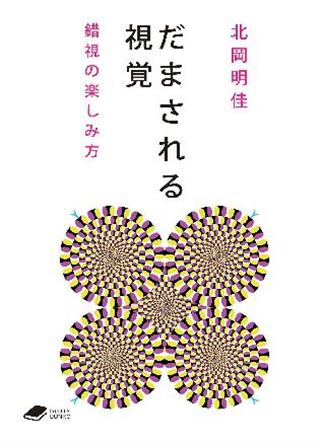
だまされる視覚

出版社: 化学同人
著者:
発行日: 2022-03-10
分野: その他  >  自然・環境
ISBN: 9784759825060
電子書籍版: 2022-03-10 (第1刷)
電子書籍
章別単位で購入
ブラウザ、アプリ閲覧

990 円(税込)

商品紹介

止まっている絵が動いて見える、同じ明るさなのに同じに見えない、まっすぐなはずの線が傾いて見える……。目の錯覚(錯視)によって、にわかには信じられない現象が発生する。なぜ錯視は起こるのか。そこに何らかの法則はあるのか。錯視デザインの第一人者が、驚異の錯視ワールドを案内して好評を博した『だまされる視覚』。文庫化に際し「赤く見えても赤ではない……自分でつくれる色の錯視」を追加した。錯視の心理学も、錯視図形のつくり方もいっぺんにわかる、究極の錯視ガイドブック。

目次

  • 表紙
  • 口絵
  • まえがき
  • 目次
  • 第1章 錯視とは何か
  • 第2章 静止画がなぜ……止まっているものが動いて見える錯視
  • 一 動く錯視の発見 - オオウチ錯視
  • 二 四つの色で動きをつくる - 四色錯視
  • 三 「蛇の回転」
  • 四 「ボート」 - 中心ドリフト錯視
  • 五 「コメの波」 - 波の錯視
  • 第3章 同じ明るさなのに……明るさの錯視
  • 一 「コンクリートの柱」 - 明るさの対比と同化
  • 二 「森」と「太陽」 - 境界が重要な明るさの錯視
  • 三 周りの明るさの影響 - T接合部が重要な明るさの錯視
  • 四 「帽子」 - ログヴィネンコの錯視とエーデルソンの錯視群
  • 五 「二人の女性」 - 輝度勾配依存の明るさ錯視
  • 六 黒い霧と白い霧 - 透明視依存の図地分化による明るさの錯視
  • 七 「神経細胞の発火」 - ヘルマン格子錯視ときらめき格子錯視
  • 八 「光る菊」 - 輝き効果
  • 第4章 水平のはずが……傾きの錯視
  • 一 「だんご30兄弟」 - ツェルナー錯視とフレーザー錯視
  • 二 「黒ダイヤ」 - カフェウォール錯視
  • 三 「クッション」 - 市松模様錯視
  • 四 「卯図」 - カフェウォール錯視の仲間の錯視
  • 五 「カメの養殖」 - エッジの変化で傾く錯視
  • 第5章 赤く見えても赤ではない……自分でつくれる色の錯視
  • 一 色の錯視
  • 二 色の錯視をつくる
  • 三 オリジナルの色の錯視のつくり方
  • 第6章 だまし絵は錯視か ? - いろいろな錯視
  • 一 だまし絵と錯視
  • 二 トリックアートの手法 - 影 ( シャドー ) と陰 ( シェード )
  • 三 ステレオグラムと錯視
  • 四 反転図形、不可能図形と錯視
  • あとがき
  • 文庫版あとがき
  • 参考文献
  • 奥付

この書籍の参考文献

参考文献のリンクは、リンク先の都合等により正しく表示されない場合がありますので、あらかじめご了承下さい。

本参考文献は電子書籍掲載内容を元にしております。

第2章 静止画がなぜ……止まっているものが動いて見える錯視

P.27 掲載の参考文献
1 Ouchi, H. "Japanese optical and geometrical art." Mineola (1977).
Spillmann, L., Heitger, F. and Schuller, S. Apparent displacement and phase unlocking in checkerboard patterns. Paper presented at the 9th European Conference on Visual Perception, Bad Nauheim (1986).
2 Kitaoka, A., Pinna, B., and Brelstaff, G. New variations of spiral illusions. Perception, 30, 637-646 (2001).
3 Kitaoka, A. Apparent contraction of edge angles. Perception, 27, 1209-1219 (1998).
4 Kitaoka, A. and Ashida, H. Phenomenal characteristics of the peripheral drift illusion. VISION (Journal of the Vision Society of Japan), 15, 261-262 (2003).
Murakami, I., Kitaoka, A. and Ashida, H. A positive correlation between fixation instability and the strength of illusory motion in a static display. Vision Research, 46, 2421-2431 (2006).
5 Fraser, A. and Wilcox, K. J. Perception of illusory movement. Nature, 281, 565-566 (1979).
6 Naor-Raz, G. and Sekuler, R. Perceptual dimorphism in visual motion from stationary patterns. Perception, 29, 325-335 (2000).
7 Faubert, J. and Herbert, A. M. The peripheral drift illusion : A motion illusion in the visual periphery. Perception, 28, 617-621 (1999).
8 Fraser, J. A new visual illusion of direction. British Journal of Psychology, 2, 307-320 (1908).
9 Backus, B. T. and Oruc, I. Illusory motion from change over time in the response to contrast and luminance. Journal of Vision, 5, 1055-1069 (2005).
10 Kitaoka, A. and Ashida, H. A new anomalous motion illusion : the "central drift illusion" (2004). 日本視覚学会2004年冬季大会発表 (工学院大学) http://www.psy.ritsumei.ac.jp/~akitaoka/VSJ04w.html (発表スライド)
11 北岡明佳, 止まっているものが止まって見える理由? "心の矛盾" 錯覚から脳を読む, Bionics, 3 (1), 55-59 (2006).
12 Kitaoka, A. Apparent contraction of edge angles. Perception, 27, 1209-1219 (1998).

第3章 同じ明るさなのに……明るさの錯視

P.71 掲載の参考文献
1 Gilchrist, A., Kossyfidis, C., Bonato, F., Agostini, T., Cataliotti, J., Li, X., Spehar, B., Annan, V., and Economou, E. An anchoring theory of lightness perception. Psychological Review, 106, 795-834 (1999).
2 Morrone, M. C., Burr, D. C., and Ross, J. Illusory brightness step in the Chevreul illusion. Vision Research, 34, 1567-1574 (1994).
3 Cornsweet, T. N. "Visual Perception." Academic Press (1970).
4 White, M. A new effect on perceived lightness. Perception, 8, 413-416 (1979).
5 Logvinenko, A. D. Lightness induction revisited. Perception, 28, 803-816 (1999).
6 Adelson, E. H. Perceptual organization and the judgment of brightness. Science, 262, 2042-2044 (1993).
7 Morikawa, K. and Papathomas, T. V. Influences of motion and depth on brightness induction : An illusory transparency effect? Perception, 31, 1449-1457 (2002).
8 Adelson, E. H. Lightness perception and lightness illusions. In M. Gazzaniga (Ed.), "The New Cognitive Neurosciences, 2nd ed." MIT Press (2000), pp.339-351.
9 Kitaoka, A. A new explanation of perceptual transparency connecting the X-junction contrast-polarity model with the luminance-based arithmetic model. Japanese Psychological Research, 47, 175-187 (2005).
Kitaoka, A., Gyoba, J., Kawabata, H., and Sakurai, K. Perceptual continuation and depth in visual phantoms can be explained by perceptual transparency. Perception, 30, 959-968 (2001).
Kitaoka, A., Gyoba, J., and Sakurai, K. Chapter 13 The visual phantom illusion : a perceptual product of surface completion depending on brightness and contrast. Progress in Brain Research, 154 (Visual Perception Part 1), 247-262 (2006).
10 Schrauf, M., Lingelbach, B., Wist, E.R. The scintillating grid illusion. Vision Research, 37, 1033-1038 (1997).
11 Bergen, J. R. Hermann's grid : new and improved. Investigative Ophthalmology and Visual Science, Supplement, 26, 280 (1985).
12 Zavagno, D. Some new luminance-gradient effects. Perception, 28, 835-838 (1999).

第4章 水平のはずが……傾きの錯視

P.105 掲載の参考文献
1 Kitaoka, A. and Ishihara, M. Three elemental illusions determine the Zollner illusion. Perception & Psychophysics, 62, 569-575 (2000).
2 Fraser, J. A new illusion of visual direction. British Journal of Psychology, 2, 307-320 (1908).
3 Gregory, R. L. and Heard, P. Border locking and the Cafe Wall illusion. Perception, 8, 365-380 (1979).
4 Pierce, A. H. The illusion of the kindergarten patterns. Psychological Review, 5, 233-253 (1898).
5 Kitaoka, A., Pinna, B., and Brelstaff, G. New variations of spiral illusions. Perception, 30, 637-646 (2001).
6 今井省吾, 『錯視図形・見え方の心理学』, サイエンス社 (1984).
7 Kitaoka, A. Apparent contraction of edge angles. Perception, 27, 1209-1219 (1998).
8 Lipps, T. "Raumasthetik und geometrisch-optische Tauschungen." Barth (1897).
9 Munsterberg, H. Die vershobene Schachbrettfigur. Zeitschrift fur Psychologie, 15, 184-188 (1897).
10 Kitaoka, A., Pinna, B., and Brelstaff, G. Contrast polarities determine the direction of Cafe Wall tilts. Perception, 33, 11-20 (2004).
11 北岡明佳, 『トリック・アイズ』, カンゼン (2002).

第5章 赤く見えても赤ではない……自分でつくれる色の錯視

P.153 掲載の参考文献
1 Shapiro, A., Hedjar, L., Dixon, E., and Kitaoka, A. Kitaoka's tomato : Two simple explanations based on information in the stimulus. i-Perception, 9 (1), January-February, 1-9 (2018).

第6章 だまし絵は錯視か ? - いろいろな錯視

P.167 掲載の参考文献
1 福田繁雄, 『福田繁雄のトリックアート・トリップ』, 毎日新聞社 (2000).
2 Ramachandran, V. S. Perception of shape from shading. Nature, 331 (14), 163-166 (1988).
3 Gibson, J. J. "The Perception of the Visual World." Houghton Mifflin (1950).
4 Noguchi, K. and Rentschler, I. Comparison between geometrical illusion and aesthetic preference. Journal of Faculty of Engineering, Chiba University, 50, 29-33 (1999).
5 Julesz, B. Binocular depth perception of computer-generated patterns. Bell System Technical Journal, 39, 1125-1162 (1960).
6 Tyler, C. W. and Clarke, M. B. The Autostereogram. SPIE Stereoscopic Displays and Application, 1258, 182-196 (1990).

最近チェックした商品履歴

Loading...